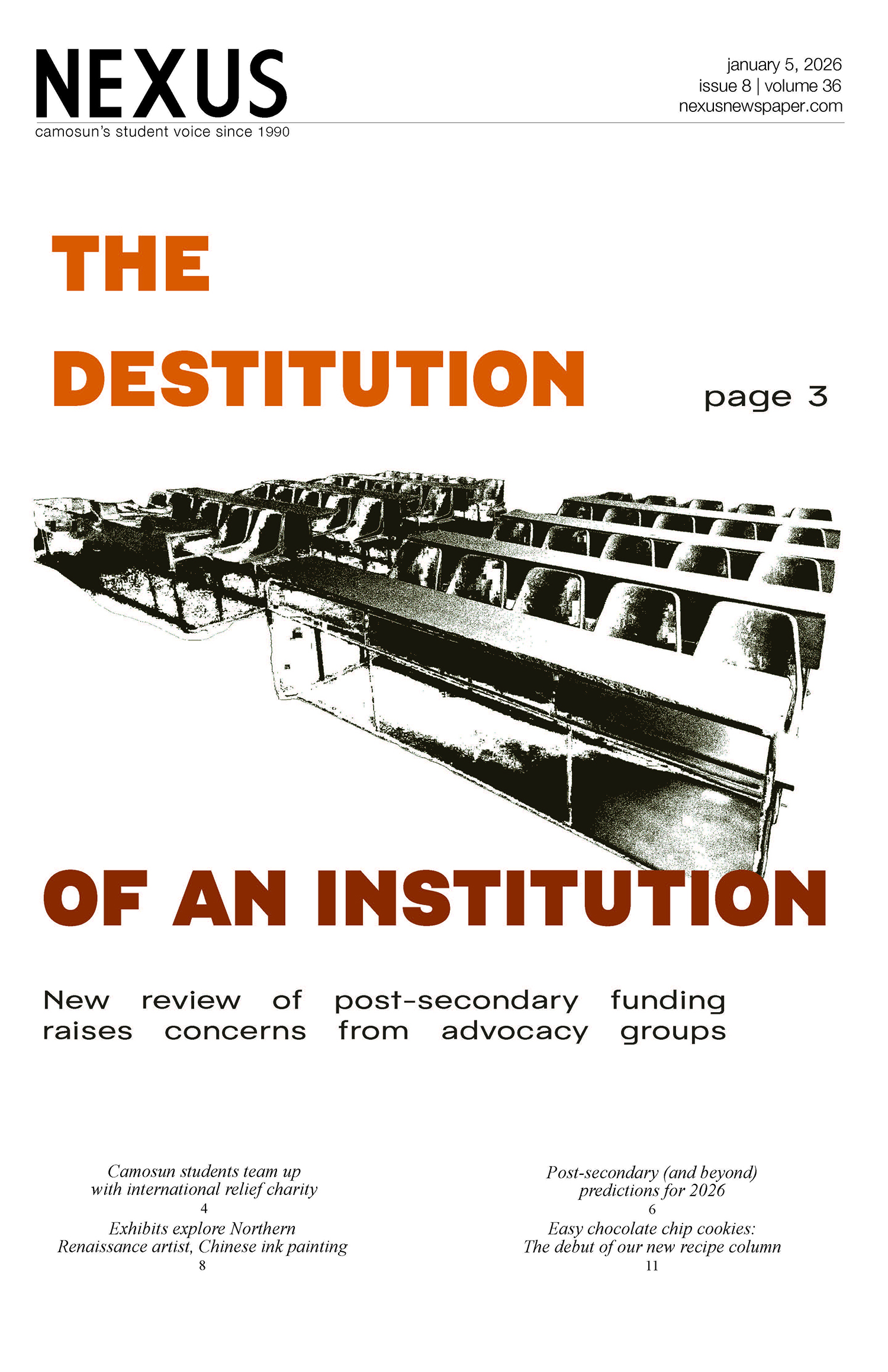
The provincial government recently announced that it’s launching an independent review of the post-secondary sector’s sustainability, and students and advocacy groups are raising concerns about what might happen as a result.
A similar review was conducted in 2022 by former deputy minister and BCIT president Don Wright; the findings of that review were shelved but released as a result of a freedom of information request in November of last year. The government announced the new review on November 25.
The review is being overseen by former deputy minister Don Avison, and is due by March 15, 2026.
In the 2022 review, it was noted that the government needed to do more to help post-secondary institutions across the province, and that it had ignored these recommendations. The government has made it clear leading into the new review that there will be no new funding added to the sector, something that has student-advocacy groups concerned.
“I think it’s important to note that this review will be used to justify higher tuition fees and more cuts, not real investment,” says British Columbia Federation of Students (BCFS) chairperson Debi Herrera Lira. “The review explicitly mentions that tuition fees will be explored, and this means that the Tuition Limit Policy—capping tuition increases at two percent—could be removed. That could make education a lot more expensive.”
Advocacy groups are also concerned about the talk surrounding “unnecessary duplications” and what removing that could look like.
“When they talk about reducing redundancy and changing regional offerings, that means that, I’m afraid that more students will have to travel further to get the programming that they want,” says Camosun College Faculty Association (CCFA) president Lynelle Yutani. “Or they’ll be forced to take local programming that doesn’t actually fit what they want to do, but it fits what the government wants because it fits what industry is demanding.”
Yutani also has concerns about the tight timeline the new review carries with it and the lack of consultation involved so far.
“This review being done in three months suggests they’ve come to this moment with a lot of ideas on how they’re going to do things, whether or not we say anything about it,” she says. “You know, we might have good ideas and I hope that they’ll be willing to listen to them, but I’m worried that they won’t. The thing that I’m still the most concerned about [are the] individual families, communities, students, the people who are going to pay the highest price for education in the future, whether that be through taxes or whether that be through education just being less affordable than it was before. We aren’t being consulted and they don’t appear to be that worried about it. That is even more concerning.”
Minister of post-secondary education and future skills Jessie Sunner says that getting rid of unneeded duplication and costs are part of having a system that works for students.
“In this review, we need to make sure that what we’re doing as a public post-secondary sector works within one another, it works as an ecosystem, so that we can make sure students have access to all the programming they want across the province,” says Sunner, “that faculty are there to teach that and that everything is working without unnecessary duplication or without overbearing administration costs.”
In a press release, the CCFA expressed concern that this review is inconsistent with the College and Institute Act and that this act could be changed after the review.
“The College and Institute Act was designed to bring accessible, affordable, and community-relevant learning directly to the communities that needed it most,” says Yutani. “Changing that act could fundamentally change the way colleges and institutes are able to serve the communities we were created for. That’s why I think community consultation is so important.”
With post-secondary institutions across the province already facing deficits due to the international student cap and a lack of funding, organizations like the BCFS are concerned about what could happen next after the review results are released.
“The lack of funding is impacting institutions massively,” says Lira. “Many of them have huge financial deficits, which means they’re having to make cuts to courses and programs, reduce services, and lay off faculty. That deeply impacts students’ ability to graduate. When a course isn’t available or a program is cut, students have to delay their graduation by a semester—or sometimes a whole year—and that’s very costly. Students are trying to finish their education, but they don’t have the services they need on campus. That definitely affects their experience. And at the same time, if the government is serious about building the workforce this province needs, it has to fund the system. We can’t build a skilled workforce on the backs of students taking on more debt and paying higher tuition fees.”
Yutani says that the results of this review could in turn lead to some big changes in post-secondary as a whole across the province.
“Instructors will still be here to provide quality education to whoever students show up, in whatever way we are allowed to,” says Yutani. “So we’re going to be here, and people who want to learn are still going to exist. So what we’re really talking about is what is that place that we do that learning going to look like and how accessible is it going to be for everyone in the future? Will we endure? The answer is yes. Will it look different in the future? Yes. And I hope it doesn’t cost too much.”