
On Monday, January 5, Laura Gover, a mother of two and Camosun Business instructor, was found dead in her Saanich home. A man was arrested by Saanich police and charged with second degree murder; he was later identified as her ex-husband, Muhammad Ali Basar. The case has been designated as a “K file” by the provincial court system; the designation indicates cases of alleged intimate partner violence.
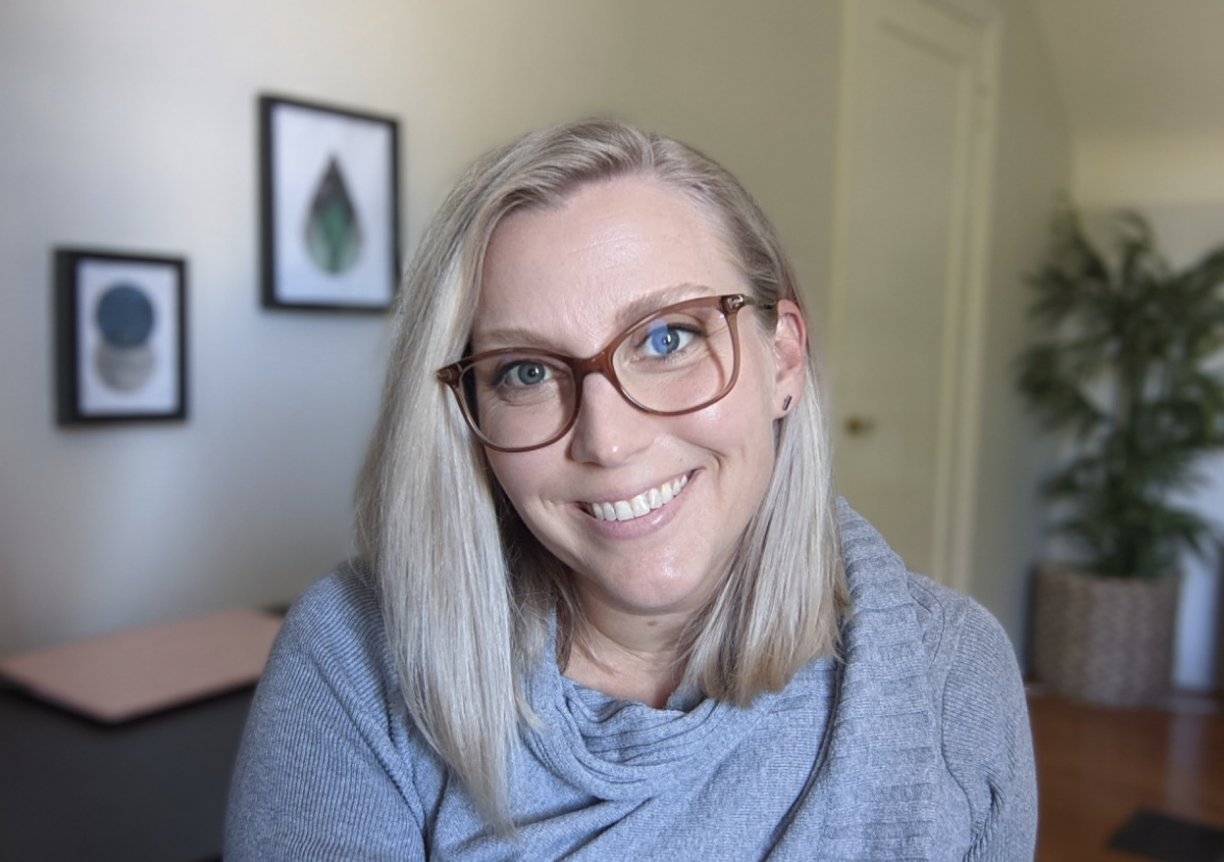
“She was a pillar of the community who will be missed for years to come” says Camosun College Student Society women’s director Madison Huynh, “and I don’t think she as a person will ever truly be replaced. She left an impact on hundreds of students and they hopefully will honour her teachings by continuing on and doing amazing things in the world.”
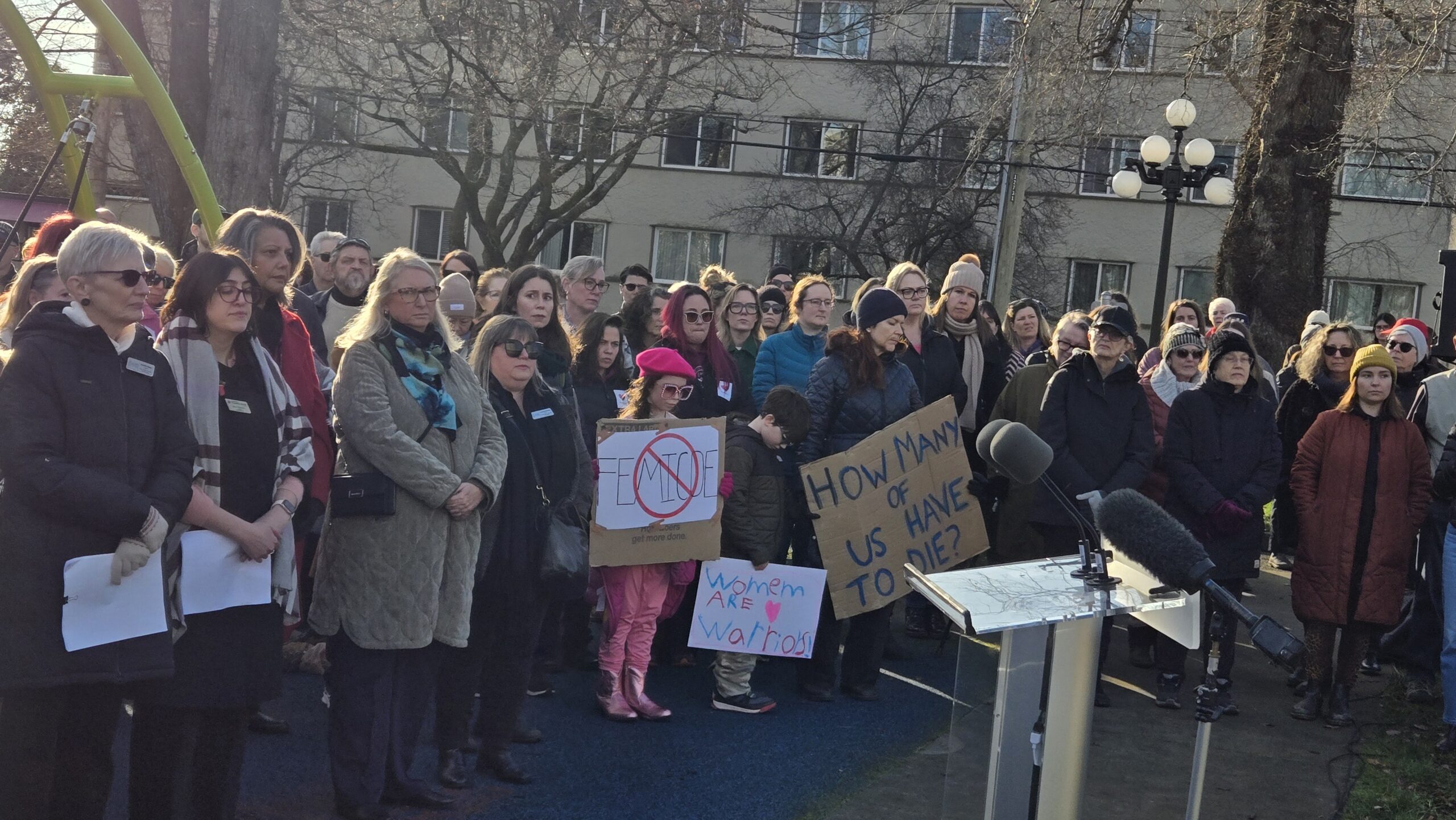
A press conference was held on Wednesday, January 21 on the grounds of the Victoria courthouse. At first focusing on the loss of Gover and the impact this will have on her family, especially her two young daughters, the wider crises of gender-based violence and intimate partner crime were then discussed.
“We gather not only to honour [Gover’s] life, but to demand accountability for the gaps that—despite years of collective advocacy—persist within the system, and to present solutions that evidence tells us will work,” Victoria Women’s Transition House executive director Bahar Dehnadi said while addressing the crowd at the press conference. “This is about respect, treating survivors with the dignity that they deserve. About prevention. Stopping violence before it turns fatal, and it is about public safety.”
Dehnadi then went on to highlight the nature of many of our judiciary systems, systems that she said are ostensibly put in place to facilitate protection of the victims of traumatic crimes but fall into a pattern of self-preservation of the status quo by being difficult to comprehend.
“Our systems have been designed around institutional comfort rather than survival, safety,” she said. “Victims are asked to navigate complex bureaucracies to wait for help due to funding gaps and overburdened services, to prove themselves over and over, while those who perpetrate violence face systems built around their convenience, minimal bail conditions, little consequences for violations.”
Dehnadi said the result of such failures are the women whose lives hang in the balance.
“We have made progress together, but progress is not enough when women are still dying,” she said. “The gaps in our systems are not abstract policy questions. They are life-and-death realities for the people that [Women’s Transition House and similar organizations] serve.” (“Women’s Transition House has been in operation for 51 years,” Dehnadi also said at the event. “I really hope we won’t exist for 51 more.”)
Cridge Transition House manager Marlene Goley also spoke at the event, highlighting the issue of victims who have come forward but not been taken seriously by authorities.
“We want women to be believed when they say they’re afraid, when they say they fear for their safety,” she said. “A woman’s fear is a risk factor that needs to be taken seriously. We want perpetrators to be held responsible right from the time she discloses her fear. Our systems need to stop putting all the responsibility for protecting herself on the victim.”
Cowichan Women Against Violence Society executive director Liza Scott also addressed the audience, saying that this ineffectiveness of authorities can have a ripple effect.
“When institutions fail to act, the violence does not stop with one woman,” she said. “It moves through families, through children, and through generations. We cannot keep responding only after women are killed. We cannot keep asking why. When the warning signs were already there, prevention must happen before crises, and accountability must sit with perpetrators.”
Battered Women’s Support Services executive director Angela Marie MacDougall said that one of the major hurdles is that there are institutional, systemic gaps within the way various agencies interact with one another.
“It sits at the intersection of police practice, Crown decision-making, judicial discretion, and the deep, deep divide between criminal law and family law,” she said. “Many women leave abusive relationships and never involve the criminal legal system at all.”
MacDougall said that this systemic disconnect can overwhelm any prescribed actions taken by the victim.
“If they have children with their abusive partner, they are forced to go to a family law system, and they seek protection orders through the family law system,” she said. “They do exactly what they were told to do to keep themselves and their children safe, and they reasonably believe that once the state is involved, the risk will be reduced. They’re optimistic. That risk lives in the space between systems, and no one owns that space. Police can say they did not meet the threshold; Crown counsel can say that the file is insufficient. When institutions are organized this way, responsibility is endlessly deferred, while dangers escalate.”
Back on campus, the student society’s Huynh says that “there definitely is a kind of quiet outrage” and adds that while there will be a larger memorial happening, there are currently smaller memorials at Lansdowne and Interurban.
“We have set up memorials on both campuses, allowing students to share their sympathies and well wishes for the family,” she says. “I’ve heard countless stories about how she was a beautiful person. Truly an example of what a good teacher can do to raise up their students, and that’s going to be missed.”
A community gathering will be held from 3:00 to 4:30 pm on Wednesday, February 4 in the Helmut Huber Annex at Interurban. There will be drinks and snacks provided in Gover’s memory.
For anyone experiencing domestic violence, intimate partner violence, or gender-based violence, the Victoria Sexual Assault Centre is available 24 hours a day, seven days a week at 250-383-3232; see vsac.ca for more information.