The results are in for the Camosun College Student Society (CCSS) elections, which were held from April 7 to April 9.
Quinn Cunningham is the new CCSS external executive, winning with 506 votes (89 percent). Amanda Garner is now the CCSS women’s director, with 529 votes (90 percent), and Savannah Barratt is the new sustainability director, with 406 votes (67 percent). Angela Chou was re-elected as the pride director with 484 votes (84 percent), and Gurkirat Singh is the new finance executive, with 369 votes (60 percent). Puneet Kaur is the new Interurban executive, with 497 votes (80 percent), and Sujin Bae is the new off-campus director, with 503 votes (86 percent).
The election also had a referendum question asking if students were in support of raising the CCSS fee levy by $1 a month to go toward funding the ombudsperson position—which the CCSS and Camosun College both fund—as well as CCSS services such as WalkSafer and general student advocacy. This passed with 386 votes (69 percent). The fee levy is currently $10.80 a month.
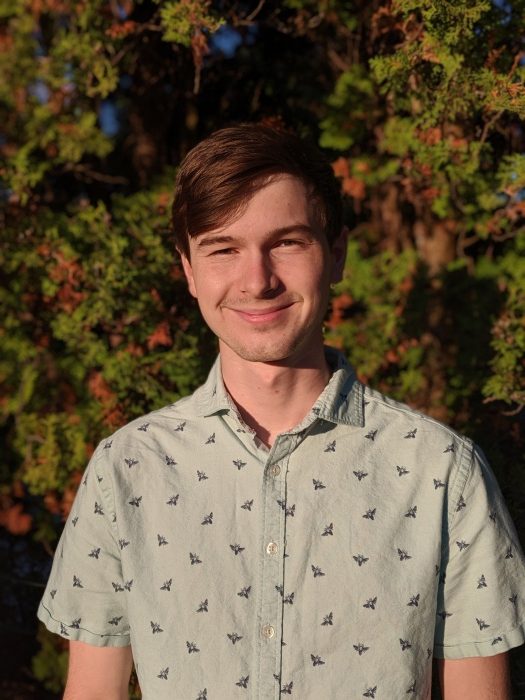
New external executive Quinn Cunningham is “super happy” to assume the position, and he’s looking forward to tackling tough issues for students, which is a large part of the role.
“I was thrilled; I love advocating,” he says about finding out he was voted in. “This year I went to Ottawa to advocate for legislation and policy-oriented changes that will benefit students, and being able to take that head-on and be able to represent the college in that regard is something I’m really excited about.”
Cunningham says he’s feeling pretty comfortable in the new role, having had a good working relationship with the previous external executive, Fillette Umulisa. He says he’s interested in working with other post-secondary institutions to try to bring students together.
“I want to try to collaborate with other colleges to find out what really works for creating community,” he says. “From what I’ve observed, student interaction isn’t particularly high at Camosun, and I’d really like to foster that growth and increase student awareness on what the CCSS does.”
Cunningham says he also wants to see students connect with each other beyond the lecture hall.
“I really want to see Camosun students being friends with each other, more relationships being established outside of the classroom, as well as interaction with the student society,” he says.
CCSS clubs and events assistant Quinn Park is pleased with the voter response to the election, and is glad that students are interested in the electoral process.
“There was ample turnout, ample input from students, even though the student society was not on campus,” he says. “Clearly students are interested in democracy at the student-society level.”
Park says the college moving classes online due to COVID-19 introduced unprecedented challenges for the election.
“Usually the campaign period is run by student candidates going out and chatting with students, and that’s a really important way for the student society to gather information about what students think, and just with the timing of the pandemic and the campaign period, that wasn’t able to happen,” he says, adding that all of the candidates seemed to handle the stresses well.
“I have nothing but good things to say about the candidates and how they were able to switch gears into online campaigning mode,” he says. “After witnessing this, I’m confident that each one of them will make a good CCSS board member; they’re able to roll with the punches.”
Cunningham says that with the new funding secured through the referendum, the CCSS can continue to help increase safety on campus, particularly with the WalkSafer program, and says that these services have another positive effect: they provide jobs for students.
“Camosun’s got limited options in comparison [to UVic], so keeping that service employed and well-funded is really important to us, especially when it comes to keeping our wages competitive, and we don’t want to underpay students,” says Cunningham.
Park says that the additional funding allows the CCSS to maintain and improve services that students want, the loss of which would compromise the student society’s ability to operate as intended.
“Services such as advocacy, the ombudsperson, and the WalkSafer program are all key parts of why the student society is there for students, so having a bit of an increase in funding towards those programs can definitely make them better,” he says. “Sustainability of these programs are key—having a student society that isn’t able to advocate for students going to classes at the college, that’s not a thing that I want to see.”
Park is looking forward to seeing what the new members have to offer, and says that he enjoys watching newly elected candidates mature in their roles.
“I love being there when board members are learning about how they can support students, and how they can achieve goals that they want to see,” he says. “Students do the best job of figuring out what they need, so that’s why we need students as board members; it wouldn’t work any other way, and I’m happy to be a part of that process.”
Park encourages students to be involved in the democratic process of student elections, and says that the CCSS places importance in allowing student candidates to express their views and create change.
“It’s important that voices are heard; that’s what makes democracy democracy,” he says. “We’ve never recommended candidates, that’s something the CCSS does not do. We give opportunities for folks to declare their platform statements, and we just encourage people to pick the candidates that are right for them.”
Cunningham urges students to connect with each other in any way they can.
“Get involved, whether it be with a club or meeting up with friends and doing stuff,” he says. “If [you] want to volunteer with the student society we’ve got lots of campaigns going on, and we want to hear from you; we want to hear what we can do better.”