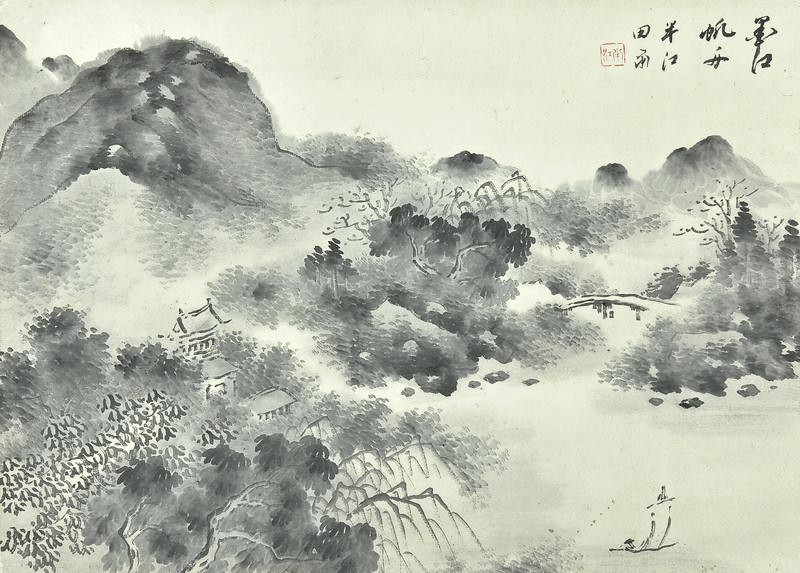
The practice of Chinese ink painting was created in the ninth century, yet it’s still alive to this day. This is what the Art Gallery of Greater Victoria (AGGV) has decided to shine a spotlight on with Fifty Shades of Ink, which focuses on ink painting by historical and contemporary artists, in addition to the gallery’s permanent Asian art exhibit.
“Ink painting, it’s a thousand-year-old tradition, but still it’s quite alive today,” says AGGV Asian art curator Heng Wu. “I’ve seen people, even in this island, are so passionate about practicing it still. So I think that’s also very relevant to our today’s life.”
Engaging with art from across the globe and across time is an important way for us to expand our understanding of the human experience, and the ways that humans are culturally interconnected.
“I also think despite where the culture and history that we’re presenting is originally from, I always believe they are shared heritage of our human society,” says Wu. “So it’s important for us to have the chance at least to experience something perhaps we haven’t known before.”
Wu says that she wants to take an inclusive approach to create an immersive experience for people to engage with that reveals that this form of art and art history is not just a dead, bygone practice, but a continuing way of life.
“I’m trying to use different approaches to weave a tapestry to showcase of our Asian art; I’m trying to put it within a context for people to engage,” she says. “From the cultural perspective, I should say, it’s not just to show the form, it’s more a way to express the idea, the mind, also the heart of the artist. It’s also a way to show how people from this culture appreciate art and create art.”
The artists who create these paintings, which were traditionally made in the 17th and 18th century using ink derived from soot and animal glue, practice this skill as a way to create more than just art—they’re meditating.
“It’s much larger than painting as an art form,” says Wu. “I think it’s also a way of thinking, because when you start to grind the ink, it is before you start to create the painting, right? It’s kind of, I should say, a meditation process. It’s a way of life. It’s a way of thinking. It’s a way of philosophy.”
Even to this day, there are artists who practice traditional ink painting, although some also use more modern inks. Wu says that the work of the artist, and also the viewing of the art by you and I, is a way to experience peace and beauty within the hectic bustle of everyday existence.
“In today’s life, maybe there are a lot of challenges, fast-paced. I hope people can slow down when they come to the gallery, they can notice the details of, for example, like tiny details of the brushstroke, the different shades of ink,” says Wu. “It’s a way for people to slow down, to calm down, to just find the peace during that process.”
Fifty Shades of Ink
Until Sunday, April 26
Art Gallery of Greater Victoria
aggv.ca