Camosun Business Administration diploma students have partnered with an international charity that focuses on crisis relief in war zones and natural disaster zones. ShelterBox has been in operation for 25 years, offering shelter, essential items, and technical assistance to places such as Gaza, Burkina Faso, Bangladesh, and Ukraine. This can include items like water filters, solar panels, tents, and medical equipment, which can be life-saving after devastation strikes.
Students in the Project Management class recently had the opportunity to test their business acumen, flex their creative muscles, and help those in desperate need by putting on a series of events in the name of ShelterBox, with all the proceeds going to the charity in order to fund relief efforts.
“Everyone [in the class] got to propose an event, keeping two objectives in mind,” says Nancy Amado González, one of the students involved with the partnership. “First, to bring awareness to the work of ShelterBox; and secondly, collect donations.”
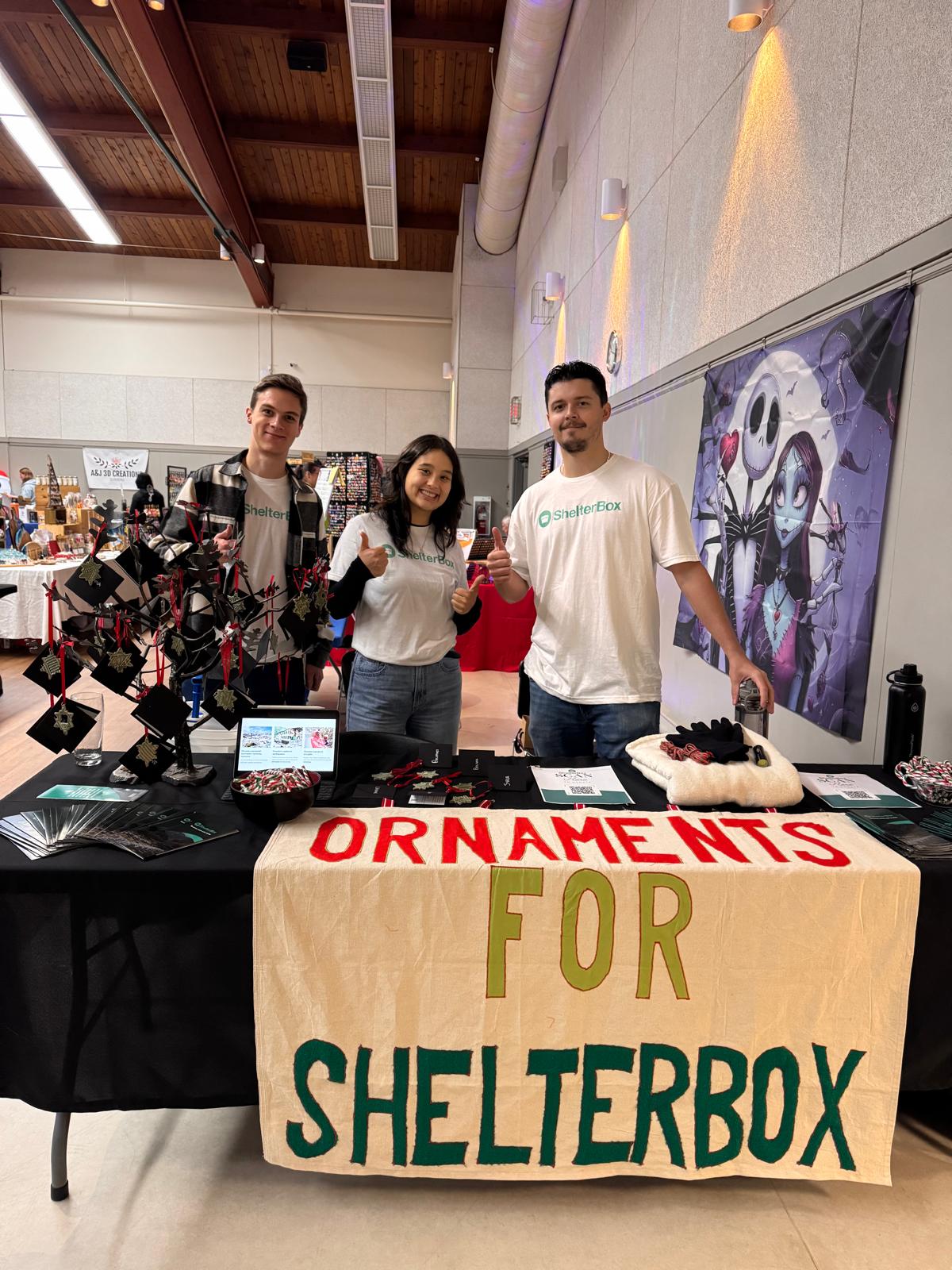
With five teams of students each tackling a separate event, there’s plenty of room for variety. One group capitalized on the spirit of the season by selling Christmas tree ornaments, effectively actualizing the double-pronged approach of collecting money for ShelterBox while also spreading awareness of their mission statement. Another group partnered with local restaurants such as Panda Island, who had a featured meal with a percentage of sales going to ShelterBox.
“This Project Management class is part of the Business and the Marketing program,” says González. “So the idea is that you’re learning concepts and theories, but at the same time you’re putting together an event where you can apply everything that you learn. So it’s not about accumulating information; it’s about developing skills to use on your project immediately.”
All of this is a tried and true methodology for this particular class, and will in fact be the third term in which Camosun Business students have partnered with ShelterBox. It seems to be a mutually beneficial symbiosis, as the numbers indicate that these projects have contributed in the neighbourhood of $6,000 to ShelterBox within the last 18 months. With the organization providing valuable aid to roughly 270,000 people across 17 countries every year, the need is substantial. And the gravity and far-reaching implications of what the project represents is not lost on the students.
“You’re helping people that need urgent aid, so it’s not [just] another assignment you complete because you have to… It also gives you that personal reward that you are doing something important to solve a real and urgent problem,” says González. “It gives you the motivation and sense of urgency to pay attention to what you’re learning and apply that immediately.”
This approach both assists the needy and galvanizes the student.
“The thing that makes it highly successful is that you’re motivated by urgency… You need to use your knowledge, you need to solve the challenge, and you have a clear moment to put everything together,” says González. “You’re also thinking about your career, and how this information is going to be useful for that… This creates the opportunity to use all this knowledge and to see actually what works and what doesn’t. You’re always doing these simultaneous processes [of] learning the concepts and using [them] in real-life situations.”