Back for its 22nd season, the Pacific Baroque Festival focuses this time around on Spanish influences. This collaboration between The Victoria Conservatory of Music and Christ Church Cathedral invites audiences to explore the rich and diverse sound world of baroque Spain, where the popular influences of Italian and French musical culture blend with Iberian traditions to create a distinct musical heritage.
Baroque specialist Lucas Harris, who will be playing several instruments at the festival, says that Spanish music is unique.
“Spanish music—just like Spanish art, Spanish cuisine—it really has a flavour of its own,” says Harris. “It’s just great to hear music in the Spanish language from that time, you know, in terms of vocal music, but also the instrumental music has a slightly different structure.”
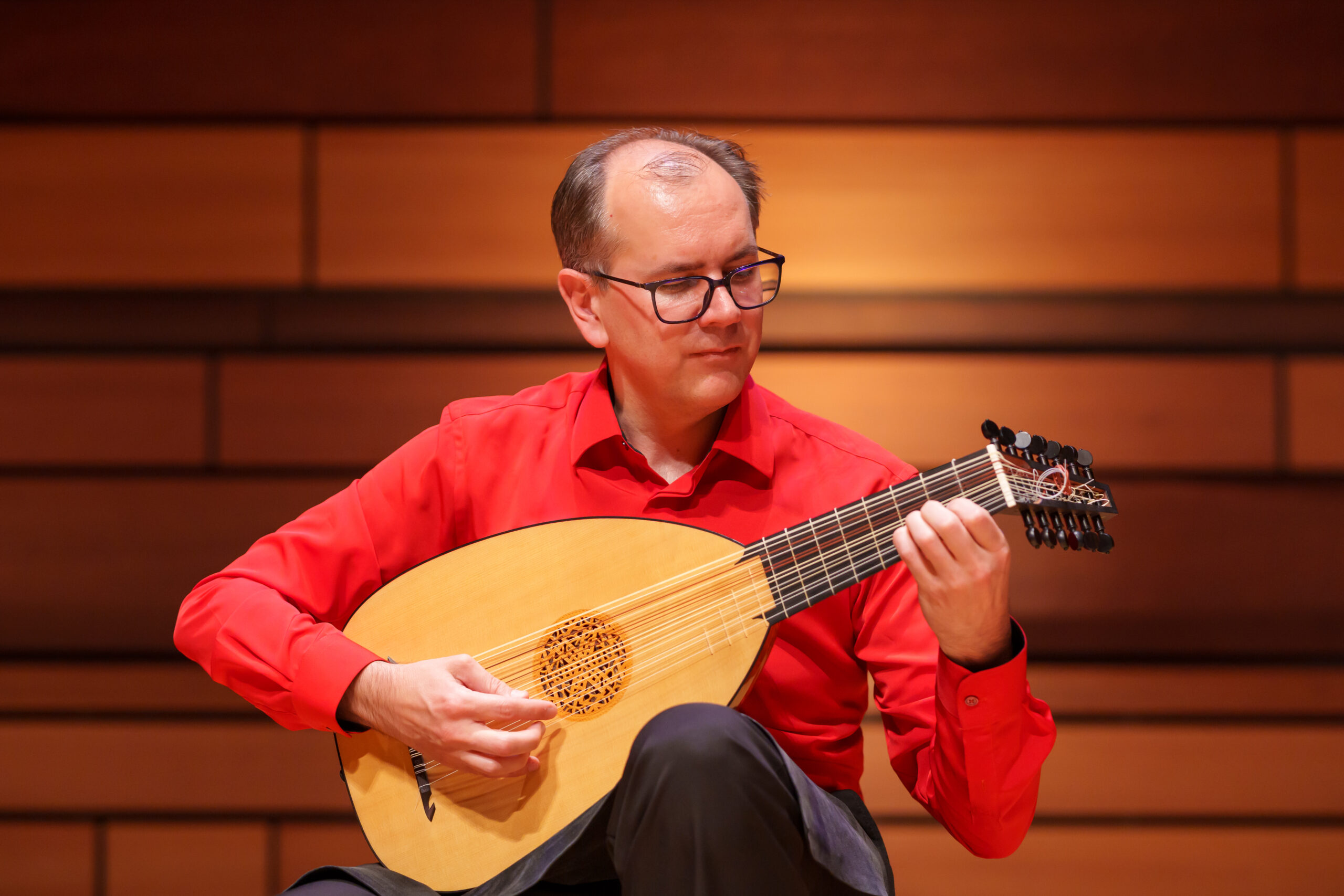
Harris points out that for about 800 years, Spain was under Muslim rule, and that this influence comes across in the art and the music.
“When you go into a Spanish cathedral, you see these certain kind of geometric patterns in the artwork and so forth that make you think of Arabic or Islamic art,” he says. “And I think you find that in the music too. There’s a certain kind of seriousness to it, a certain kind of symmetry or balance to it. It just kind of seems to have a flavour of its own. It comes out in small details.”
While classical music isn’t as popular now as it was a few centuries ago, Harris believes that there’s still a dedicated following that continues to live on and find new members.
“If you look at it from the point of view of society as a whole, certainly there are lots of people who don’t necessarily have playlists of baroque or renaissance or medieval music,” he says. “But there is a core of people who have been exposed to it in the right way, who fall in love with it—and once you’ve fallen in love with it, people keep coming back to it.”
The difference between music from the classical era and modern music is that modern music tends to be about specific recorded performances from individual artists, whereas in the classical era, recording technology didn’t exist, so the music had to be written in a way that was timeless and could be performed by anyone.
“There was a little bit more emphasis on the composer—the way the music comes to us, it’s always the composer’s name comes first rather than the performer,” Harris says. “I kind of doubt that in 400 years people are going to be listening to our music. It’s, a lot of it, about the [artist’s] personality, and do you think certain Prince songs—how would they really be the same if it weren’t Prince singing them?”
Harris thinks that the festival is worth attending because of the richness of the music on offer, and that while this style of music is a little bit different than a lot of well-known classical, it has a distinct beauty.
“You’re going to hear an incredibly diverse collection of music that spans the gamut from gentle and ethereal and floating to rhythmically driven and injected with dance-music energy,” says Harris. “You’re going to end up being educated too about a whole area of baroque music that’s not as well known as your Vivaldi and Bach and Handel. And the music is really of good quality and deserves to be heard. Anybody that knows the festival is going to trust that they’re going to hear something that’s really worth coming to.”
The Pacific Baroque Festival
Wednesday, February 25 to Sunday, March 1
Various times, venues, and prices
pacbaroque.com