
100 Sunset
Danielle Mier, contributing writer
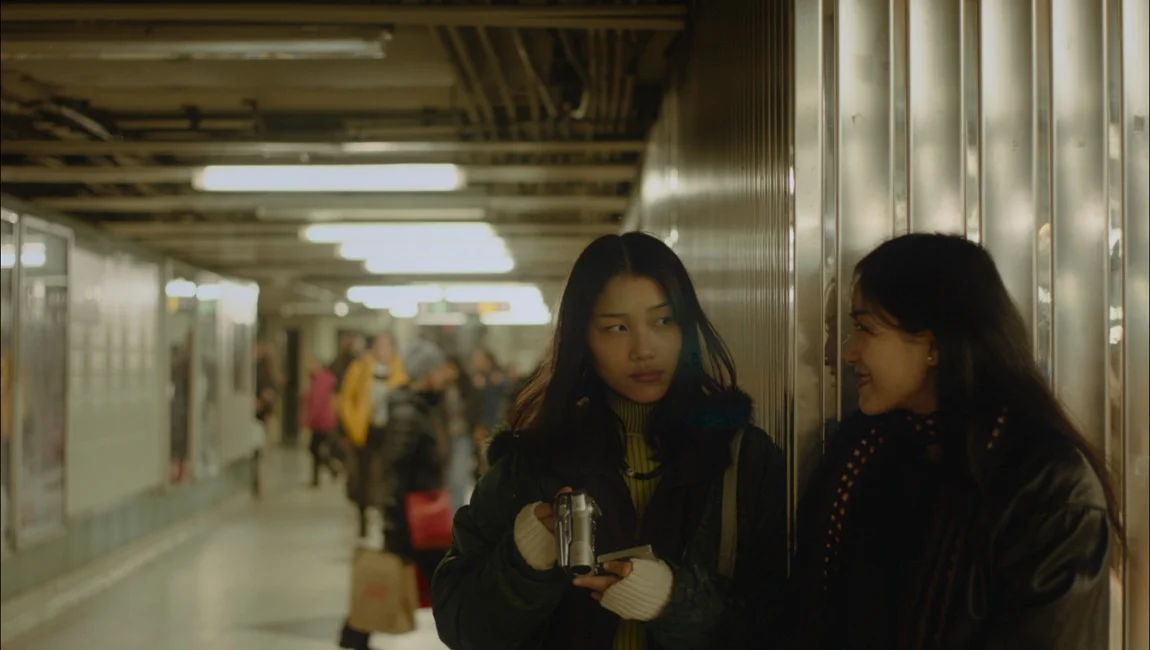
100 Sunset is a captivating film that deeply resonated with me. The plot was solid and—although relatively simple—unpredictable. In a sense, it’s a tale as old as time when boiled down to its base elements. Most of us have experienced what these characters have, or have in the past; their stories are relatable and deeply human.
The acting was phenomenal; the entire cast did a great job of making the film feel raw and mysterious. Tenzin Kunsel genuinely portrayed the complicated emotions and feelings of the quiet protagonist, also named Kunsel. The addition of the rough camera footage is also worth noting, as it helped to portray the everyday magic we feel going on small adventures with loved ones, the camera an important object in itself.
100 Sunset accomplishes tone with ease. Sitting in the theatre, surrounded by the sound of munching, whispers, and throat clearing, I felt a deep sense of solitude; Kunsel’s sense of otherness and her solemn demeanour are infectious. This is important to the plot of the film because when a new person comes into her life, the change is apparent. When the protagonist spends time with this new person, events seem more exciting, silence is less ominous, and the world the characters live in feels warmer. The simple yet impactful fluctuations in tone drew me into the film and made me feel emotionally invested in the lives of the characters. It made the movie believable, real.
I would have liked to have learned a bit more about the histories of the side characters. All of them clearly had complex backstories of their own, wrought with hardship, heartbreak, and mystery. It would have been interesting to see this explored more through the items Kunsel stole, as it was with two particular objects that play big parts in the story. Nevertheless, I loved the lore that was revealed.
I also wanted to see more from the conclusion of the story, although I felt that the sombre note it ended on was appropriate. Anyone who appreciates themes of solitude, fitting in, and love gained and lost should see this movie.
Although 100 Sunset is set in a Tibetan community in Canada, the themes are relatable to anyone who has felt lonely, out of place, or simply stuck. Movies like this should be made and they do have a purpose. I left the theatre with a sense of contemplation, and I felt somewhat heavy. An item, or a bond, can mean so much to someone and so much less to someone else, sometimes nothing at all. In a world ruled by the cycle of loss and gain, what can we truly hold onto, tangible and intangible? It’s all part of the human experience, and 100 Sunset tells this story masterfully.
Carolina Caroline
Lane Chevrier, contributing writer
Outlaw spree films like Bonnie and Clyde (1967), Dog Day Afternoon (1975), Thelma & Louise (1991), and Natural Born Killers (1994) are classic vicarious entertainment, giving a non-criminal audience a taste of the highs and lows of American lawlessness. Carolina Caroline is no exception, directed by Adam Carter Rehmeier and starring Samara Weaving as Caroline alongside Kyle Gallner as the charismatic conman Oliver. Set in the southern United States, somewhere around the ’80s, this film focuses on the relationship between a naive southern country girl and a slick bad boy who rolls into her life, pulling a simple quick-change scam at a gas station that she sees right through.
Yearning for a more exciting life, Caroline is captivated by Oliver’s roguishness, and runs off with him to start a life of crime, first beginning with small scams, then escalating to pickpocketing and, finally, large-scale bank robbing. As you would expect, there’s a period of excitement and elation as this exhilarating adventure puts the two lovers on top of the world. However, at some point, the stakes get too high, the risks are too great, mistakes and bad luck catch up with them, and everything goes to hell.
The story idea is unoriginal, but it follows a formula that’s successful because it’s believable. Crime is attractive for its gains, but, eventually, mistakes compound and the anti-heroes find themselves in over their head. The casting of Weaving and Gallner is excellent, and they both believably embody the characters. The acting is a bit mixed, however. Gallner’s performance is somewhat wooden. While he easily portrays a calm, smooth criminal, his range is lacking when it comes to the emotional scenes. Weaving, however, believably portrays a smitten girl who is in over her head, crumbling when things go from bad to worse.
Carolina Caroline is directed and produced excellently, however, there’s more than a touch of unrealism in how breathtakingly beautiful they both look all of the time, which really doesn’t capture the gritty feel that a film like this demands. There’s something about crime films set in the ’70s and ’80s that almost requires an ugly, savage feel. (One excellent example of this is 2003’s Monster). On one hand, it really portrays the time period, but also a certain dishevelment and lack of composure sells the characters as real people, not Hollywood heartthrobs with hairstylists on demand.
However, for anybody who enjoys a good crime thriller, Carolina Caroline is an impressive and entertaining treat, with high production values not expected at an indie film festival.
Omaha
Lane Chevrier, contributing writer
Omaha is a movie about a single father of two going on a long road trip to Alaska with his children. This simple premise occupies the entire hour-and-a-half runtime. It becomes evident early on that they’ve had to leave their home because they were evicted after the mother of the children passed away, but we know nothing beyond this.
The film fills its runtime by focusing on the everyday experiences of a lower-class American family. It is very well shot, directed, and acted, particularly by the children, who seem to be about five and nine years old. There are many organic moments that feel candid and unscripted, and anybody who has raised children will immediately see themselves in the experience of this parent.
The man is struggling financially; he has trouble providing food for his kids and their dog. As expenses pile up and food stamps run out, it becomes clear that taking care of his family is a huge struggle.
The movie’s startling twists revolve around themes of abandonment. On one hand, the father seems stoic, poor at communication, and willing to take drastic measures without explanation. On the other hand, it reveals how much stress he has been under. He doesn’t seem able to communicate these ideas to his children before implementing them, because they’re too difficult.
The most sobering part comes at the end. On-screen text reveals that there was a recent law change in Alaska that allowed parents to abandon infants at hospitals without being charged criminally. However, no age limit was specified. In the short time it took to change this, over 30 children were abandoned, none of them infants.
There’s something heartbreaking in the quiet, peaceful scenes of driving along long American highways and through quiet run-down cities on overcast days. They show the overwhelming desperation that so many working-class families in America suffer through. It’s a subtle way to make a point about harsh economic conditions and the gritty, unglamorous nature of real life.
My main criticism with Omaha is that the film’s very minimal plot doesn’t justify a feature-length runtime. Many scenes feel redundant and could be shortened or removed without losing the tone. I can’t help but think this would have worked better as a strong 30-minute short film rather than a much longer feature.
However, I do think it achieves what it set out to do, and it does so in an artistic and thoughtful way.
Space Cadet
Matias Li, contributing writer
Space Cadet by Canadian DJ Kid Koala is a poignant and intimate coming-of-age story. Its slapstick comedy and childlike aesthetic is made for laugh-out-loud entertainment for young viewers. Just below this artistic humour, however, is a surprisingly deep commentary on life’s inevitable changes amid the progression of time, and the struggles of growing up.
Set in a futuristic world where robots are commonplace, Celeste and her technologically dated guardian robot navigate their changing roles in life. The tight-knit pair is separated for the first time as Celeste embarks on a solo space mission while the guardian robot must remain on Earth. Each goes on journeys of their own. The guardian robot undergoes a very sentient, emotional exploration. It discovers its identity and what it values as its hardware gradually breaks down. Celeste, on her own for the first time, takes on great responsibility and danger as she pioneers research on a solo space mission, learning how to overcome hardships by herself.
Most strikingly, there’s a total absence of dialogue in Space Cadet. Kid Koala instead chose to fully rely on movements and gestures conveyed in the animation. In one scene, the robot prepares a full breakfast for Celeste, but she runs out to attend a space meeting. The lack of dialogue made this scene brilliant, as the animation showed the robot’s silent slump. You could just feel the growing feeling of obsolescence and worry that the robot was going through as he stared emptily at the untouched meal that he made for Celeste. This artistry connects the audience emotionally to the feelings and struggles of both characters.
The film has a very unique and endearing animation style. The slight choppiness and cartoonish art style is reminiscent of stop-motion animations. The scenes were not smooth like a live-action film. Instead, they had slight but noticeable delays between each frame, giving Space Cadet a bouncy, homemade feel. This further elevated the childlike wonder and the movie’s coming-of-age theme. I loved how the animation style contrasts with the mature themes of the movie, bridging the gap between a younger and older audience.
Space Cadet focuses only on the guardian robot and Celeste’s story, and there are no side characters or side plots. This further enriches the narrative, enabling the movie to unfold in a linear manner that captivates the audience’s undivided attention to its messaging and storyline.
It’s disguised as a cute kid’s film, but Space Cadet is a deeply moving and artistic commentary on the march of time and responsibility.
To the Victory! (За Перемогу!)
Matias Li, contributing writer
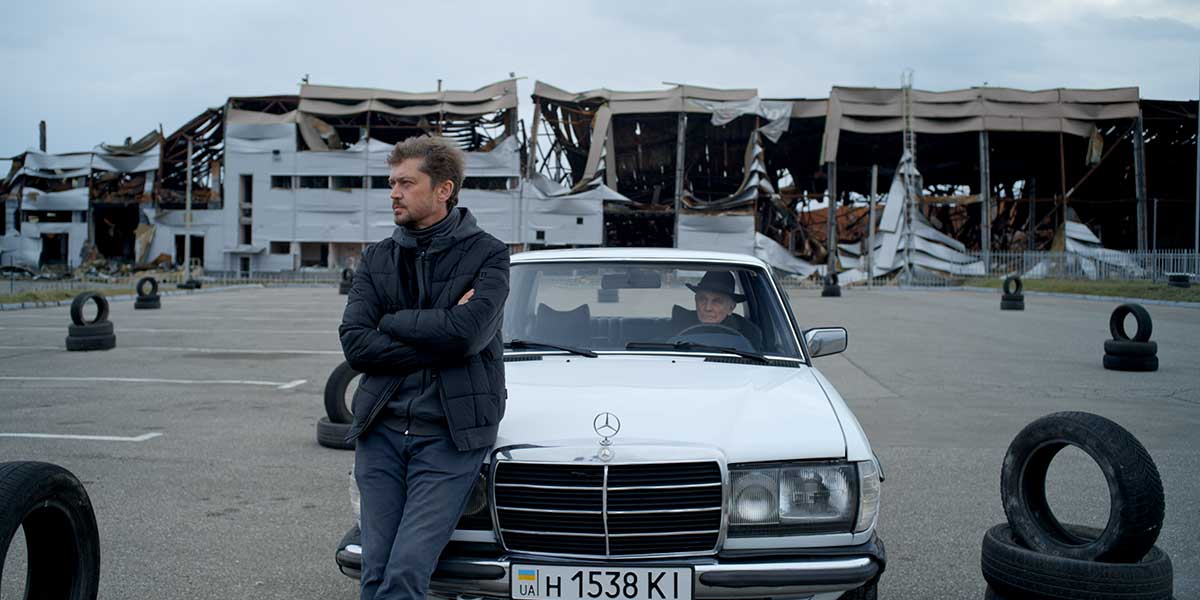
In To the Victory! (За Перемогу!), writer and director Valentyn Vasyanovych tells the deeply personal journey of Valyk, a Ukrainian filmmaker, as he grapples with artistic struggles, patriotism, family, and the rhythm of life. A ruminative drama, we’re taken deep into the effects of war upon Ukrainian daily life.
Set in a near-future scenario where the Russo-Ukrainian war has ended in a Ukrainian victory, the film follows Valyk—played by Vasyanovych—navigating the uncertainty, necessary choices, and cautious optimism of post-war life. He persists in creating his movie with friends while struggling to hold a long-distance marriage together. We see Valyk and his wife’s diverging visions for the future, as he repeats his desire to stay in his war-ravaged homeland while she refuses to give up her and their daughter’s lives in peaceful Vienna.
The scenes alternate in an almost arbitrary fashion. This unusual form of pacing is intentionally fragmented and reflects the disjointed nature of life. The slow pace of the movie mimics reality, giving the film a sense of distinctive realism that makes viewers feel like they are next to Valyk while he navigates his messy world.
We see Valyk live his mundane life, cleaning up after his son and hanging out with friends; these moments are juxtaposed with the dangers of war, such as when a mine goes off, injuring one of Valyk’s friends. Punctuated throughout the movie, we witness ruptures in Valyk’s marriage.
Unlike conventional war films that rely on shocking scenes of destruction and over-the-top heroics, To the Victory! shows the human cost of war. The audience watches Valyk and his film crew long for their families, who fled to distant nations such as Spain and Austria. We see the characters video call their loved ones, and we feel how hard it is for them to make these impossible choices between being with family or staying behind to rebuild their Ukraine.
One of the film’s standout techniques is its use of long, static shots. The camera remains still throughout entire scenes, and shots continue even after the characters finish acting. By allowing scenes to breathe, the film invites the audience to settle into the motions of post-war life.
Despite its artistic elegance, To the Victory! is weaker in its plot, with the film often feeling more like Vasyanovych’s personal feelings than a coherent film with characters. None of the characters, except for Valyk and his immediate family, were very distinguishable. It was confusing to figure out who was who, as the development of these characters was jumbled, and it was easy to confuse everybody’s personalities and goals.
Don’t expect a traditional story where one connects to a plot. See the movie instead to experience the director’s personal messages and reflections on what struggles post-war Ukraine will go through.
To the Victory! is a creative offering that presents a tapestry of life in post-war Ukraine. It captures both mundane and profound moments with the same reverence, intricately illustrating the toll of the war as well as the messy, non-linear paths that the characters have toward recovery.