
International Women’s Day has long been a marker for the social, cultural, and economic advancements made by women over the past century. It’s a day of reflection, celebration, and, most importantly, radicalization. At least, that’s how it started. You see, in order to fully comprehend the importance of International Women’s Day, we must first open a history book. Because what once served as a symbol for social and political progress is now nothing more than a gentrified corporate holiday, complete with marketing campaigns and meaningless social media posts. But how did we get here?
It all started (more or less) in the early 20th century, when the Socialist Party of America—urged by activist Theresa Malkiel—brought about the first Women’s Day the United States had ever observed, on February 28, 1909. The next year, at the first International Conference of Working Women, hosted in Denmark, German activist Clara Zetkin proposed that every country—on the same day every year—should celebrate women and honour their demands for equality and suffrage. This, of course, was met with unanimous approval, and, thus, International Women’s Day was born. Well, the idea of it, anyway.
While International Women’s Day was celebrated across several countries, it had not yet reached its fullest potential, nor would it for the next 11 years.
You see, it was only in 1922 that Vladimir Lenin, the first official leader of the Soviet Union, declared March 8 to be International Women’s Day. This was done as a means of honouring the contributions made by women during the Russian Revolution of 1917. And, ironically, this was the date that actually stuck. So if you’re ever looking for someone to thank for the legitimacy of this international holiday, you can confidently turn your attention to a multitude of Marxists from across the pond (among others, of course).
Because of this, International Women’s Day saw a sharp decline in popularity in the United States that only began to return in the 1970s, due to a considerable effort by the second-wave feminist movement to reframe its socialist origins.
Despite this, the holiday itself was not recognized by the United Nations until 1975. Wondering what took so long? Well, it was those pesky socialist origins, of course! You see, there was still a pretty deep sense of political discomfort regarding socialism in the United States, especially in the Cold War era.
Basically, you can put a sweater on a snake, but it will still be a snake. Unless, of course, that snake is an American capitalist!
So now that we have a basic understanding of the origins of International Women’s Day—socialism, the liberation of the working class, anti-capitalism—we’re now perfectly suited to ask the very question that makes all those western wealth-hoarders squirm: how exactly did we allow this holiday to be deformed by neoliberalism and co-opted by corporate giants?
The answer, I feel, is really quite simple: capitalism feels good. It’s under this system that we’re able to grant ourselves the illusion that upward class mobility is entirely within our control, and thereby, should be our sole responsibility. In other words, it’s under capitalism that we are owed nothing and must work for everything.
This ideology, while appealing to some, serves only to shirk the responsibility of those above you to act wisely in their power, thus creating a dichotomy wherein your caregiver is not actually required to care for you at all. They need only tell you to care for yourself.
This isn’t to say that the Marxists were on the right track either. But to observe the current capitalist system and see no flaws is to look with your eyes closed. And in the context of women’s rights, this truth only becomes more glaring.
The idyllic concepts perpetuated by capitalism were the very things which turned people against it throughout the 20th century. To tell an entire nation that all one has to do to achieve great things is work hard feels remarkably insincere when roughly half the population, purely based on sex alone, has not found that to be true. And it’s this mindset that can be pointed to as an impetus for the actualization of women’s rights in the context of economic freedom, as the dreamy promises of capitalism were never actually made to women to begin with, despite the fact that labour has been at the forefront of their movement since the beginning.
Why is that, I wonder?
Well, likely because many western economic systems have benefited greatly from the unpaid, or underpaid, labour of women. This practice has been highly effective at lowering the cost of workforce maintenance while simultaneously ensuring that women don’t get too comfortable with the idea of financial freedom.
This framework of exploitation has been a focus of the women’s rights movement for as long as the system has been in place. And until the day capitalism ceases to favour profit over social prosperity—something which it is systematically opposed to doing—this pushback is not likely to see an end any time soon.
Now, I’m sure I don’t have to tell you that this actively goes against everything that International Women’s Day initially stood for. Adequate compensation, fair treatment in the workplace, general safety, you name it.
And from a commercialized standpoint, it only gets worse. International Women’s Day was once a beacon of hope for the broader working class, encouraging solidarity and celebration for all. Now, however, there is a clear emphasis on individual accomplishments, effectively negating that message entirely. Rather than celebrating women at large, we are now encouraged to empower woman, singular.
Bearing in mind the point of International Women’s Day—to draw attention to systemic issues and policies affecting women so as to bring about actual, tangible change—this shift is completely reductive.
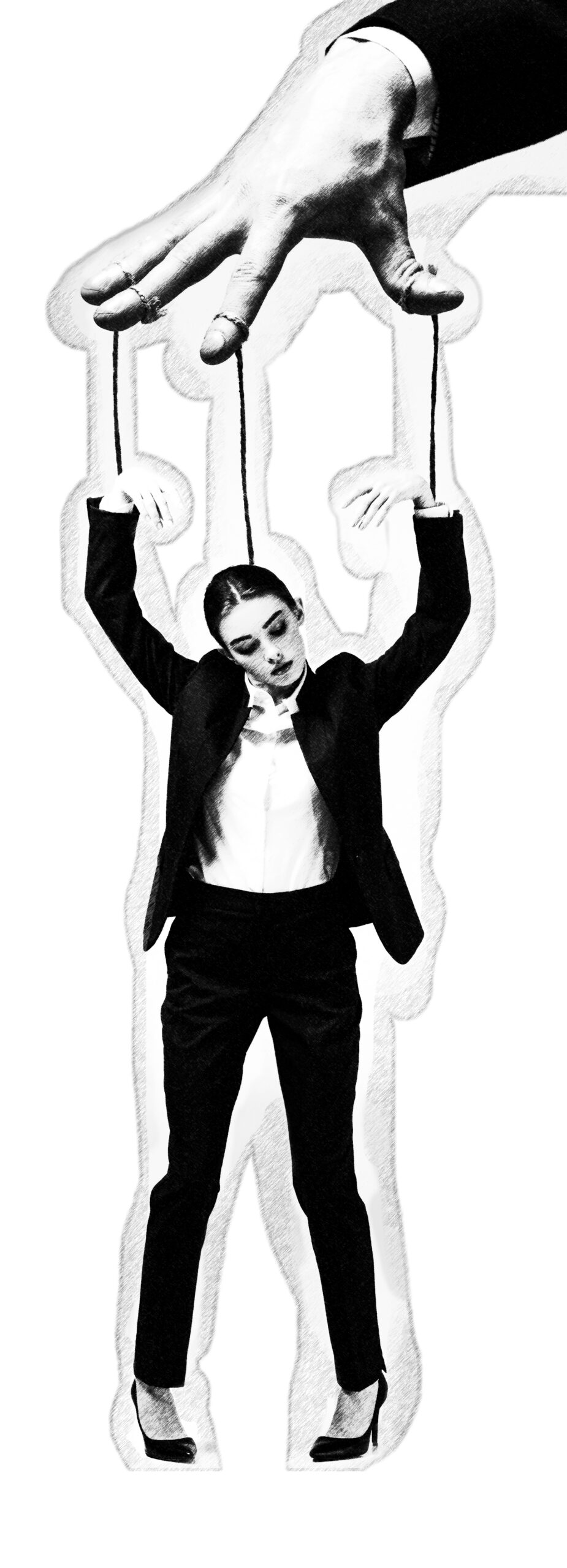
Of course, it’s important to uplift one another. But if all we do is promote the advancement of women within a system that’s specifically designed to keep them down, then we aren’t really changing the system, are we? We’re just accepting it, making do with it. And, more than that, we’re allowing those who created the system to weaponize the success of others as a means of reinforcing inequality and perpetuating an unsustainable work culture.
To be blunt, the prolonged existence of sex-based structural biases in the workplace are not likely to be overthrown if all we do is conform to them. The point of International Women’s Day, at least in part, is to create meaningful change for all women, not just yourself.
It’s nice to receive accolades, I know. But to shrink a woman down to the size of her accomplishments in the context of a capitalist society that knows of nothing but hyper-productivity does absolutely nothing to help the movement. And while chocolates and flowers are nice, sure, they do not create workplace safety, end period poverty, support reproductive rights, or advocate for equal opportunities. Nor does the endless onslaught of discount codes, marketing emails, and social media posts.
This sales-driven approach to celebrating women’s accomplishments is both feeble and meaningless. We have somehow managed to commodify a century’s worth of suffering and turn it into something sellable. With half-baked slogans and mass-produced merchandise, it’s easy to see just how terribly we’ve missed the mark, relentless in our misunderstanding of International Women’s Day.
On top of that, there is an unnatural intersection between feminism and capitalism wherein the belief that women should strive for superficial, individualistic power is perpetuated. Think of a magazine article that purports to break down a list of the most successful, influential women of our time. Feels compelling, right? That’s because capitalism feeds off our natural desire to be useful and important, and exploits that desire to best suit its needs.
Now I want you to think of all the millions of women around the world who weren’t included in that list, purely because they didn’t have the power to rise above their station. This isn’t reflective of a poor work ethic or a lack of motivation, but rather a system that’s not optimized to bring to light all that women have to offer. This isn’t a matter of productivity; it’s a matter of circumstance.
Just because the struggles facing women today are not always within our immediate view does not make them any less real. And in today’s age, it can be clearly observed that the more we de-radicalize International Women’s Day the less we understand about its purpose. It’s not just a celebration of accomplishments; it’s a call to action.
But what sort of action should be taken? Well, to answer that question, we’re going to have to take a quick step back and flesh out those sex-based structural biases I was talking about a little bit more, beginning first with the G20.
There’s not a single country in the G20 that has actually managed to achieve gender parity across all sectors. And while Canada is head and shoulders above the rest in terms of its public service, there’s still a considerable lack of representation for women in politics. In fact, of all the 13 provinces and territories, only two have premiers that are women.
The first is Susan Holt, who leads the Liberal Party of New Brunswick, and the second is Danielle Smith, who leads the United Conservative Party of Alberta. Holt, as premier, has placed the majority of her focus on affordable living, accessible healthcare, and economic reform, whereas Smith has committed herself to making everyone outside the province of Alberta wonder how she got elected in the first place.
This opens the floor for a pretty necessary discussion on how we direct criticism toward women in the context of gender equality. In the case of Smith, the issue is not simply that she is a woman in power, but rather that she regularly misuses her power for the sake of harming others. A key example of this is the invocation of the notwithstanding clause, which protects new legislations from being overturned by courts, regardless of Charter violations. This has allowed Smith to restrict both gender-affirming care and the athletic participation of transgender youth within Alberta.
This is worthy of criticism not because of her sex, but because of her actions. Accountability is something to which we all must be held because without it, there can be no progress. And to refrain from criticizing someone as a means of preserving the sanctity of gender parity is both foolish and harmful. Avoidance will never amount to equality.
Apart from public service, women are still wildly underrepresented in the energy, automotive, and financial industries, among many others. In fact, a report conducted by Canadian law firm Osler, Hoskin & Harcourt LLP in October of 2025 found that nearly 30 percent of publicly traded companies in Canada had no women in executive officer positions. Curious, when you consider the fact that women have been outpacing men in the race to obtain a bachelor’s degree for over three decades now. So what gives?
Well, for starters, roughly two in five Canadian mothers have reported having to put their careers on hold due to caretaking and housekeeping responsibilities, and nearly half have found the balance to be insufficient at best. This naturally correlates to the employability (or, rather, unemployability) of women in the workforce, as they are often considered to be less reliable than their male counterparts.
This reinforces the demand for more flexible work opportunities across Canada, as mothers and fathers deserve much more accommodation than they are currently receiving in the workforce. Career advancement should not be penalized by having a family or any other responsibilities outside of the workplace. Humans are meant to take care of each other, and that should not be a punishable offence. However, in a system that frequently prioritizes the robot-esque productivity of its employees, it often is.
This, in itself, perfectly encapsulates the point of International Women’s Day. Each of our lives has a balance unique to us that should not be compromised for anything, yet, for decades, women have had no other choice. And while we’ve undoubtedly come a long way, it’s not enough to simply hold a handful of accomplishments in our palms and think the work is done. International Women’s Day advocates for the equality and fair treatment of everyone in our society, and in order to keep on this path toward prosperity, we must continue to fight for that balance. We must continue to give a radical response to a radical situation, and change will follow.