
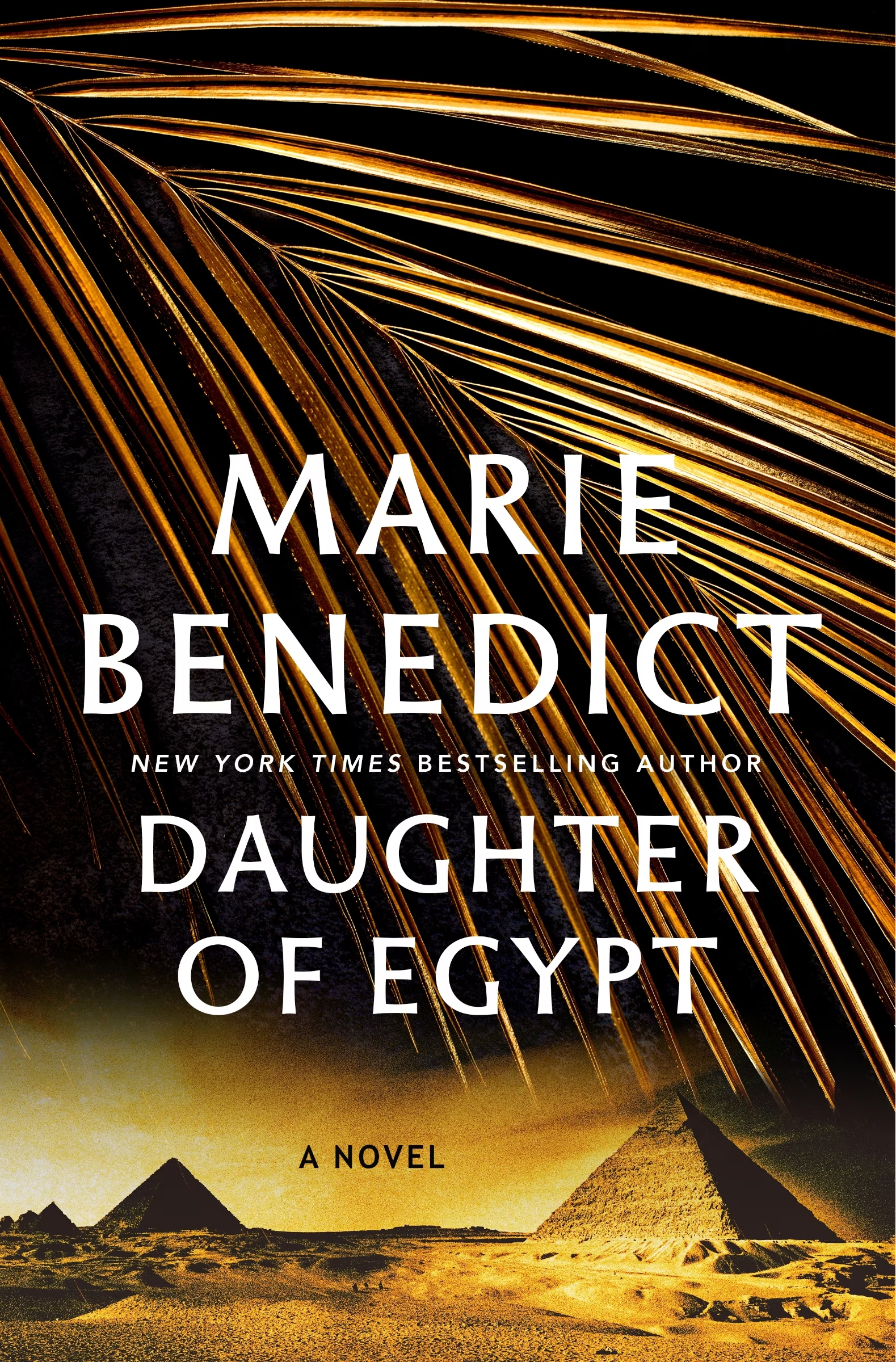
Pulling from the pages of recorded history and seamlessly blending facts with a fictional story, Marie Benedict brings the past to life in Daughter of Egypt. Benedict tells the story of two extraordinary women in this dual-timeline novel that delves into the world of ancient Egypt, archaeology, and the role of women in days gone past.
Lady Evelyn Herbert is an ambitious and passionate young woman living in 1900s England, a time when women were expected to be quiet, demure, and only concerned with socializing and marriage. But Eve is not like her peers. Trading ball gowns for khakis, Eve follows her father, Lord Carnarvon, and renowned archaeologist Howard Carter into the desert of Egypt to join his excavations in the Valley of the Kings in hopes of uncovering the tomb of Hatshepsut. Eve fears she will not get a chance to pursue her dreams to completion as Egypt revolts against British rule to take back control of their once-great nation.
In 1486 BC, Princess Hatshepsut was the God’s Wife of Amun, and the only surviving child of Pharaoh Thutmose I and his queen, when her father passed unexpectedly and the rule of Egypt fell to her. Hatshepsut faces opposition from numerous parties as she carves her own path, defying tradition to sit upon the throne as pharaoh.
The parallel stories of these women are defined by their ability to rise above expectations and leave their mark on history, only to have their names and successes forgotten and overshadowed by the men in their lives.
As someone who has been fascinated with ancient Egypt since childhood, I was drawn to the story for its subject matter and the characters, whose stories I had never heard before; I share Eve’s curiosity and enthusiasm for the ancient world, and it was fun following her discoveries.
The book was packed with historical figures, facts, and details about both women and their respective time periods. Unfortunately, there are limited records of Hatshepsut and far more questions than answers to the mysteries around her life, death, and erasure, leaving much to the imagination. Benedict offers her vision of Hatshepsut’s legacy and a glimpse into what life might have looked like for her.
I enjoyed Benedict’s elegant prose and descriptive passages, and the narrative had a nice flow, but it felt somewhat rushed. There were numerous time jumps that left wide gaps between the chapters only to be partially filled in later through the characters’ thoughts. The story spans about 30 years of Hatshepsut’s life as she transitions from princess to pharaoh, but only a few significant moments are described and many years pass in between each chapter. Hatshepsut’s chapters were very interesting and quite enjoyable; I would have loved to have read more from her perspective.
In comparison, Eve’s story was far more developed and detailed, with fewer time jumps over four years of her life. In either case, I think the time jumps took away the opportunity to really connect with the characters, particularly with Hatshepsut, and to see the events unfold rather than being recounted.
Overall, I found the book to be both interesting and informative while also being beautifully written. Benedict’s passion for sharing the stories of the women history tends to forget really shines through in her works, and this book is a gem to add alongside her many previous publications.
If you like historical fiction, I recommend checking out Daughter of Egypt for your next read.