
Casey and Diana by University of Victoria grad Nick Green explores the lives of men living with AIDS in a hospice home as they explore community and search for dignity in their final days. Centred around the anticipated visit of Princess Diana, the men grapple with the knowledge that they will likely die in the place that they now call home.
One of the play’s greatest strengths is its characterization. Each character feels distinct, and their personalities complement one another in a natural and engaging way. They often have humorous banter amongst themselves, making them very real and relatable.
Thomas (played by Morgan David Jones), in particular, stands out for his frequent monologues and witty comments, often delivering cultural references that keep the audience entertained. However, the heavy reliance on monologues becomes a weakness over time. While some are well-timed and effective, many feel unnecessary and repetitive. Their frequency diminishes their impact, making them feel less significant and, at times, better suited to written text than a spoken performance such as this one.
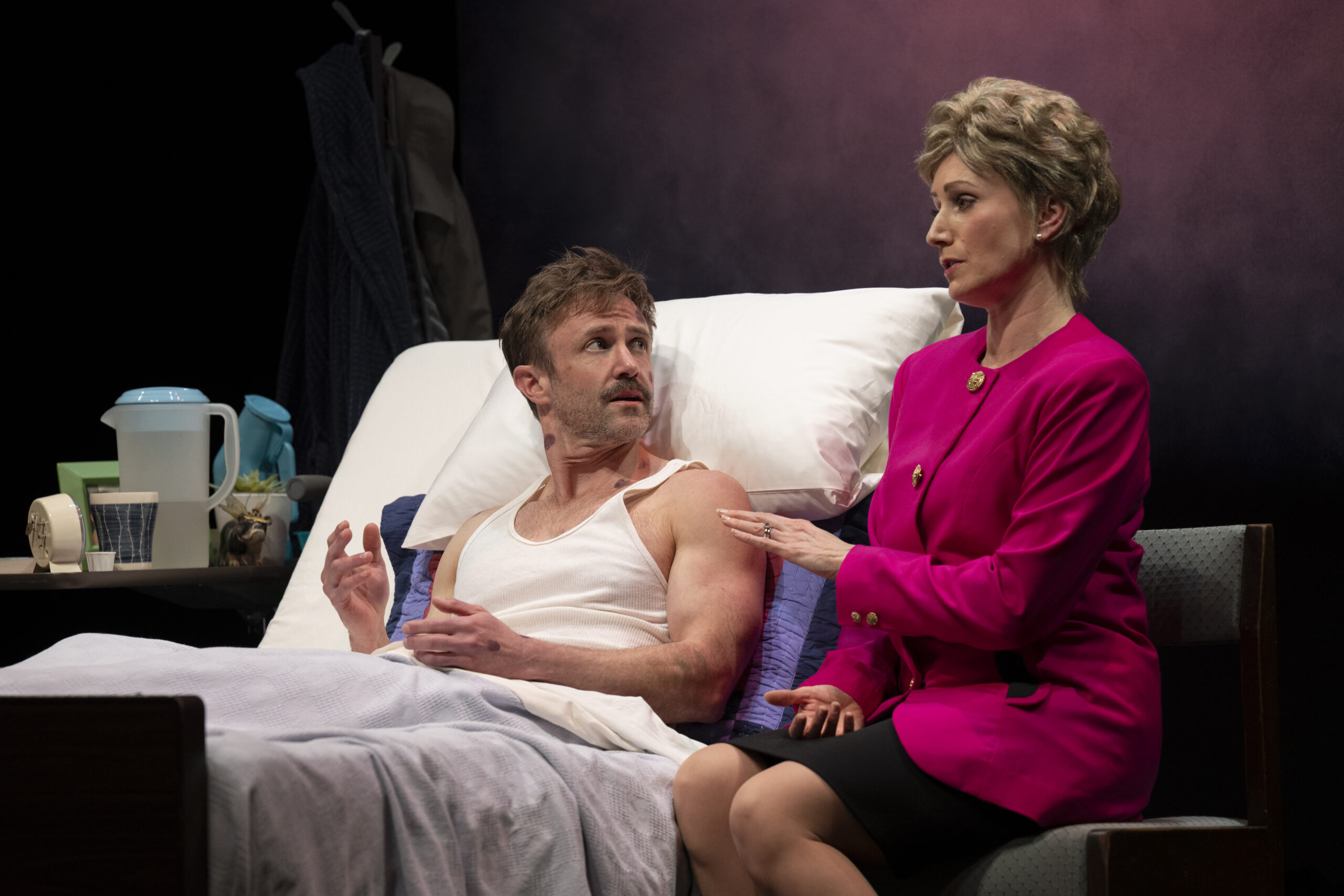
The acting also shows a clear strength in the production, elevating the atmosphere even when the script feels a little awkward at points. Each performer brings a strong sense of authenticity to their role, allowing the audience to genuinely feel the emotions being portrayed on stage. The actors deliver their dialogue with convictions, giving the play a sense of realism that makes the characters’ experiences more impactful. In particular, the performances of Jones and Celine Stubel (who plays Pauline), really stand out given the emotional depth of their characters. Both actors display intense vulnerability and really make scenes especially emotional. Overall, the cast works cohesively; their skill and commitment to their parts significantly enhances Casey and Diana.
The play’s handling of tone is a partial success. The comedic elements are consistent and often genuinely funny, making the production more lighthearted than one may initially expect. In some cases, it makes it feel more real; it reflects how people may use comedy to cope with difficult circumstances. However, several scenes spend time building tension, completely silencing the audience, only for that silence to be quickly broken with a comedic comment. This repeated interruption significantly prevents the audience from fully resonating with the emotions going through the characters.
From a production standpoint, the play is thoughtfully executed. Although the set remains consistent throughout, the use of the stage is very meaningful, with furniture pieces and props dictating spaces; even the lighting helps separate areas more distinctly in an interesting way. Although there’s limited use of exaggerated lighting and sound, the play does not suffer a lack of it at any point.
Ultimately, Casey and Diana is a compelling albeit inconsistent production. It tackles an important and emotionally charged subject with energy and humour, supported by strong performances and thoughtful design. However, its tendency to undercut serious moments with comedy really prevents it from reaching its full emotional potential.
Casey and Diana
Various times and days, until Sunday, May 17
Pay what you can, Belfry Theatre
belfry.bc.ca