
The long-running Victoria Fringe Festival is in its 40th incarnation, once again brought to our fair city by Intrepid Theatre to showcase outsider performance art. Fringe fests have long been the domain of the freaks and geeks, and a safe harbour for anyone not quite fitting into the mould of what you could call the “societally sanctioned,” and this year’s roster is no exception. In the true spirit of art and the world of theatre, there’s been no kowtowing to puritanical prescriptions, and Alisha’s Light is at the vanguard of it all.
For those unfamiliar with what a Fringe Festival is, a quick explanation: Fringe fests feature a roster of performances that are not selected by a panel of judges, and are not censored, meaning that the shows are chosen by either first-come-first-served registration or a random lottery system. All the box-office revenue is given to the performer, and the venues are often untraditional spaces and smaller theatres off the beaten path. The tradition of Fringe festivals began in Edinburgh, Scotland, in 1947, when eight uninvited theatre troupes showed up unannounced to the Edinburgh International Festival, and performed their artistry on the sidelines (or fringe) of the official festival, giving rise to the title.
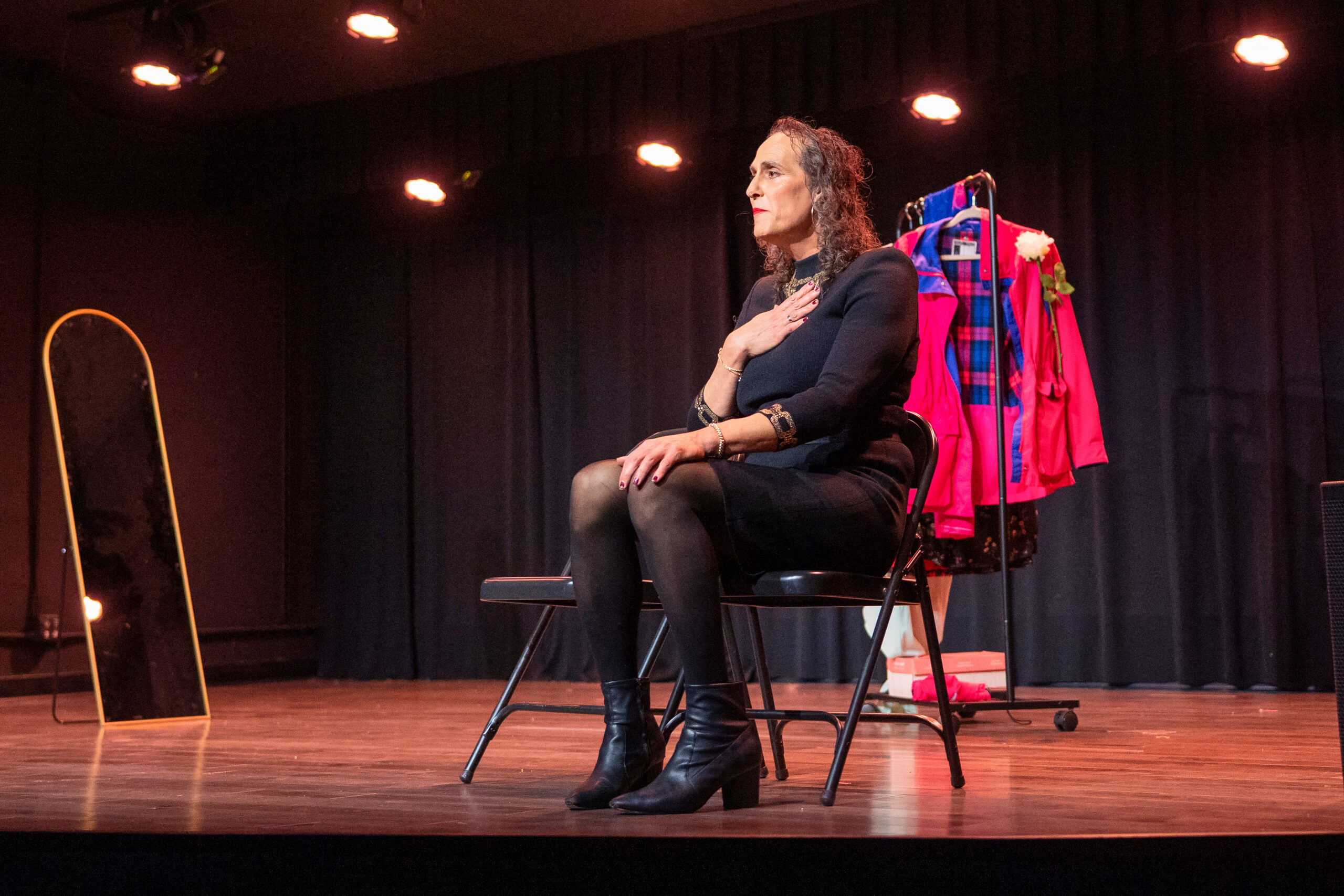
Alisha’s Light is the autobiographical spoken-word poetry of one Alisha Richard detailing her coming-out story and the events that rose and fell alongside. What, for anyone, is a time of great upheaval and reckoning—and can come with devastating loss and triumphant gain—is something that, for many of us, happens in our teens and 20s. The timing can be the trick, because although we’re often still living under the roofs and auspices of parental figures, we’re also at a stage of life where we’re tentatively forging paths and putting down roots. Not so for Richard, who came out as a transgender woman at the age of 57, with a full-on wife, traditional job replete with a large cadre of co-workers, and two grown sons.
These high stakes, as I learned through poems and re-enacted conversations, did not dissuade Alisha. They did not convince her to just wait for another lifetime, as they may have some of us. Instead, they seemingly galvanised her, spurring her onwards, making her determined that the aforementioned light she had discovered inside her when trying on her wife’s brightly coloured dresses one day deserved to be allowed to shine and be shared with the people she cared about most.
The poetry, while having clear delineations as it moves from topic to topic—often highlighted by lighting changes and stage movement—flows incredibly smoothly. As Richard moves through subjects—some lighthearted and funny, others decidedly darker and more upsetting—her cadence altering to reflect emotional intonation, she never misses a step. I found myself wondering on the drive home how she could possibly keep all that in her head, before deciding that the only answer was that it was because it had never really left. It’s obvious throughout the performance, especially in its darker moments, that this is a woman baring her heart and soul to a room full of strangers, and trusting that her reserves of inner strength—and her stores of inner light—will be strong and bright enough to shore up any damage taken.
This show should be required viewing for anyone interested in making political proclamations about the rights of transgender women.