
Anton Chekhov, the Russian playwright renowned for his understated humour, social commentary, and psychological realism, debuted his tragicomedy The Cherry Orchard, in 1904; it continues to influence and inspire theatre, actors, and performances.
The play follows aristocratic landowner Lyubov Andreyevna Ranevskaya and her family upon their return from Paris, chronicling the loss of their ancestral estate. It’s a social commentary set against the backdrop of immense systemic change: the fall of agrarian, feudal Russia and the dawn of capitalism’s new money and the commercial class, setting the stage for the Russian Revolution and the cataclysmic end of the Russian monarchy Romanov dynasty.
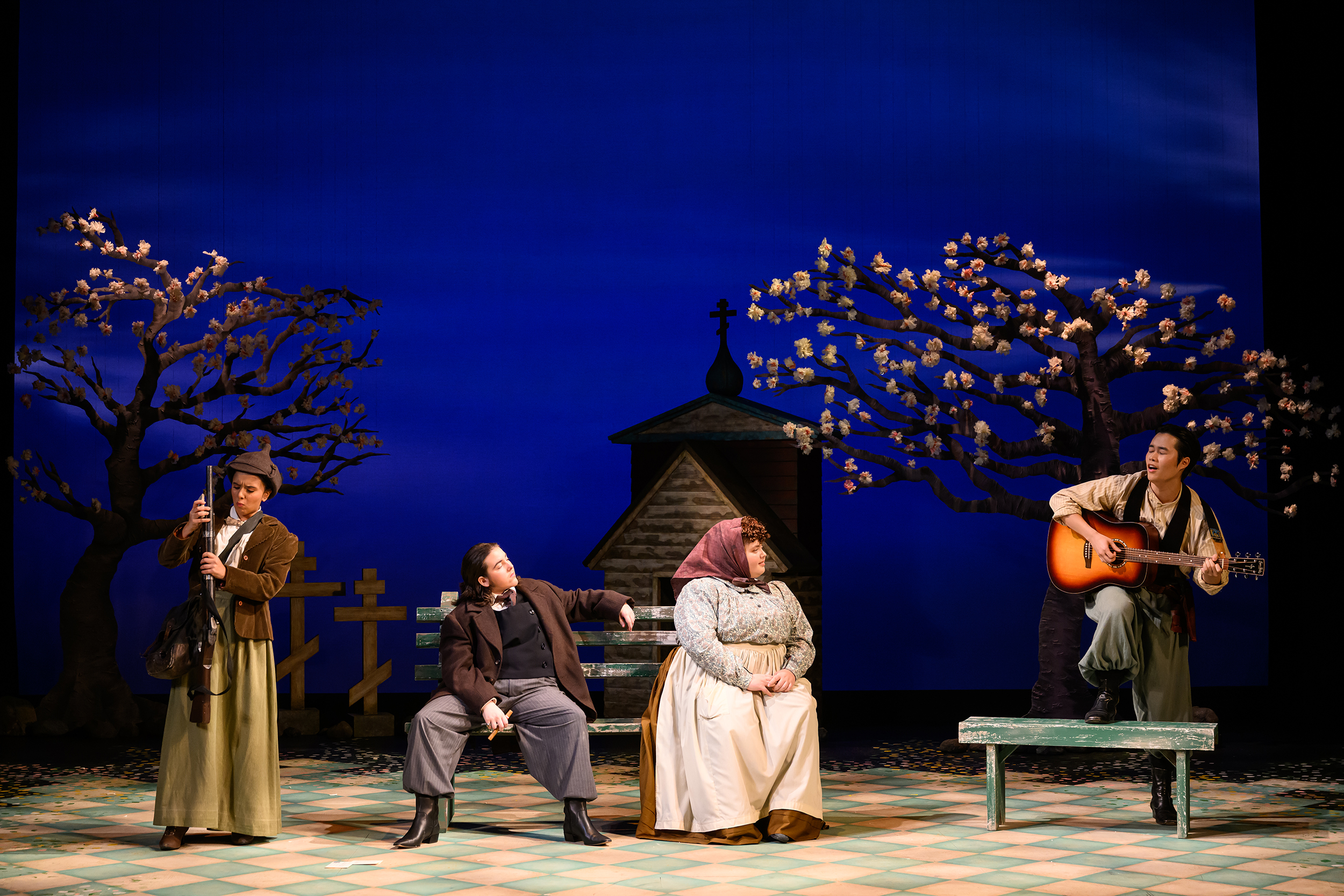
I have a background in theatre, so as I walked into the Phoenix Theatre at UVic and took my seat, I was reminiscing about all the times it had been me waiting in the wing gazing out at the dark shadow of the audience through the curtains, awash with nerves and excitement for the curtains to open and the lights to go up. Sitting in the dim light, a different kind of anticipation washed through me. Nostalgia. Longing. And an intense desire to be the one on stage.
Then the audience lights faded out.
The opening set design was understated, a little decrepit yet atmospheric, doing an excellent job of establishing the play’s tone of antiquated luxury and dying wealth, transporting the audience back to the opulent world of Imperial Russia standing on a precipice. Long a fan of Jane Austen and Downton Abbey, I was in my element. As an actor, I was fascinated watching those on stage bringing Chekhov’s characters to life.
The actors were resplendent in their stunning blouses, with long pleated shirts, heels, and tweed suits, tailcoats, and vests, reflecting the characters’ respective social positions and attachments to tradition. Ranevskaya’s Victorian bustle dress visually connects her to the old aristocratic order, while Anya’s simpler silhouette suggests a younger generation looking toward modernity.
Though occasionally kitschy, the lines and acting brought the period to life, incorporating precise lighting and authentic 19th-century vocabulary and costuming, making for an immersive experience.
The classical, Mozart-esque music immersed me in the theatrical atmosphere, enabling me to feel the summer, cherry-scented air outside and hear the background noise of civilization.
Through the family’s struggle to reconcile its attachment to the past with the realities of an uncertain future, Chekhov explores a society undergoing significant social and economic change, making the cherry orchard a symbol of the old aristocratic order, increasingly displaced by commercial development and the rise of new money. Through his themes of nostalgia, social change, and the passage of time, Chekhov presents a compelling examination of a world on the brink of transformation. With the benefit of historical hindsight, the play’s themes foreshadow the extraordinary upheavals that would soon transform Russia.
More than simply entertainment, The Cherry Orchard is thought-provoking, making it an enjoyable evening, particularly as an occasion to dress up, sparking conversation throughout the car ride home as a play worth seeing and attending. The Cherry Orchard, set amid the transition from old, Tsarist Russia to the modern world, serves as a metaphor for the declining aristocracy and the end of gilded Imperial decadence. Chekhov illuminates the end of not only a family estate and its beloved orchard, but an entire way of life summed up in the dull thwacks of axes against the cherry trees as the curtains fall and everything goes dark.
The Cherry Orchard
Various times and days, until Saturday, November 21
Various prices, student rush tickets $20 30 minutes before each show
Phoenix Theatre, UVic
phoenixtheatres.ca