
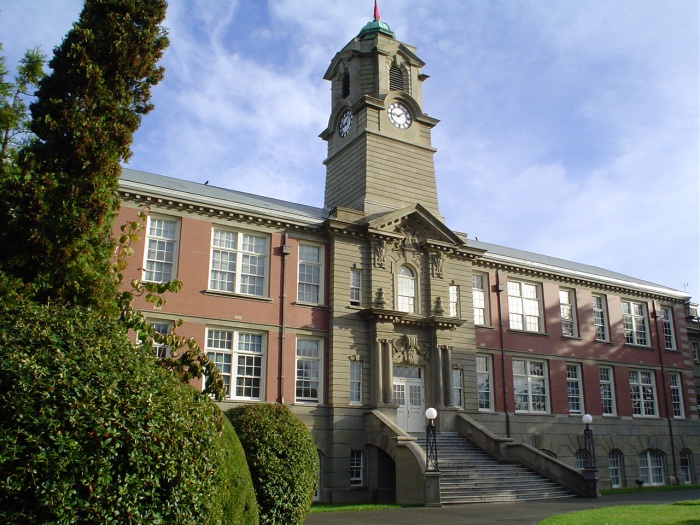
Camosun College announced on Wednesday, March 4 that it needs to reduce its 2026-27 budget by anywhere between $7.2 and $9 million, and student and faculty advocacy groups are concerned about what this could mean for student services and job security.
This announcement comes after the federal government announced cuts of approximately 49 percent to the number of seats available to international students across the country in late 2025.
At Camosun, international student revenue was originally budgeted at $35.6 million for the 2024-25 fiscal year; that number decreased to $21 million for 2025-26.
The province gives operating grants to post-secondary institutions but the amounts of the grants aren’t changing to address the deficit created by the international student caps.
“We’re paying very close attention to how this will affect the students’ experience,” says Camosun College Student Society external executive Terence Baluyut, “and we understand that the college is facing a serious financial shortfall, especially with declining international enrolment. This is a structural issue affecting institutions across the sector but of course I think that financial sustainability can come at the expense of student support and accessibility; there needs to be a balanced approach.”
Camosun sent Section 54 notices to the Camosun College Faculty Association (CCFA) as well as to the unions that represent Camosun staff and faculty—BC General Employees’ Union (BCGEU), and Canadian Union of Public Employees (CUPE)—earlier this month. This section of the BC Labour Relations Code mandates that notice be given to the unions if layoffs or restructuring that go against the Collective Agreement are expected within the next 60 days. The college has said it has no intention of cutting programs or courses but will adjust how many sections of existing courses are available.
CCFA president Lynelle Yutani is concerned that this will lead to loss of jobs among faculty, and less opportunity for students.
“You’re going to see longer waitlists [and] fewer sections,” says Yutani. “It’s going to be harder to navigate around work schedules. We know students often have one or two jobs outside of going to school, so we can absolutely predict that it’s going to become harder to navigate through post-secondary education. Right now, what that looks like from the faculty perspective is that we have to cut everything internally that can be cut before layoffs are the only other option.”
Yutani says the CCFA is frustrated not about the budget problems in general but with Camosun “not doing it in a good way.”
“[It’s] not about the fact that budget problems are happening, but not being consulted, not being allowed to be part of the solution, I think that’s what is most frustrating,” says Yutani. “We have a school full of experts in various fields and because we’ve never been invited to help turn our attention to solving these problems… It’s felt like we’ve been shut out.”
Camosun declined to be interviewed for this story, with a spokesperson saying they can’t add anything beyond what’s been shared through statements on the college’s website and the Camosun’s Future web pages.
Yutani says that there’s also concern that this will disproportionately impact sectors of education that deal with the arts and culture, along with other areas that aren’t as easily monetizable as the trades (in November, the provincial government announced it is investing $241 million over the next three years in trades training).
“Our employer is prioritizing the things that the government prioritizes because they get a mandate letter from the government that says, ‘We want workers, and we want them as cheaply as possible, and anything that is extraneous is not going to be funded,’ and so we worry, and we’re getting strong signals that that’s going to be it,” says Yutani. “The humanities, the social sciences, anything that doesn’t serve a purpose inside of a program that, you know, delivers workers to industry… [the college will] basically be reducing the frequency and the number of course offerings.”
International enrolment has dropped even beyond what has been stipulated by the federal government; at Camosun, the number of international students has dropped by approximately 60 percent since the government started announcing new limits on international student numbers in early 2024.
“We’re unlikely to have the international student enrolment even that we have available to us through the seats that we have available based on what we’ve seen” says Yutani. “And part of that is because I think that with the changes from the immigration standpoint, it’s not as attractive and the pathways to permanent residency and citizenship have been severely limited.”
Yutani believes that this is not a sudden systemic failing, but one that has been quietly building for years.
“The problem that international-student tuition was being used to solve is one that we made at home,” she says. “It’s one that happened internally in BC through the decades, and we’re talking three decades of post-secondary education being silently and slowly defunded… It’s been a terrible business plan, although it’s been one that everybody’s been happy to let sort of fester in the background, because it wasn’t what politicians will call a kitchen-table issue.”
And while the two-percent cap on annual tuition hikes for domestic students is still standing firm, it could find itself in the crosshairs.
“Tuition was frozen 15 years ago, [and] it’s only increased two percent per year, but the cost of delivering programs has increased more just like everything else,” says Yutani. “I think that there’s a big problem, the government refuses to spend any more money or keep track with inflation… they’ve also reduced the funding, it went from almost 70 percent 30 years ago down to 40 percent of the funding that colleges need to… operate.”
Baluyut and Yutani agree that changes need to be begin at the legislative level, and that citizens and students alike need to get involved.
“Two weeks ago, our team also met with local MLA Diana Gibson, who is the minister of citizens’ services,” says Baluyut, “[and] we’re not very happy with the response of the MLA, she was not very responsive towards that specific ask. It seems like they’re just letting the ministry [of post-secondary education and future skills] deal with the matter right now. I think it’s important for our people, our community to continue pressuring our local MLAs, and to ensure that our concerns here at our college would be echoed better at the Legislature.”
“I think the best-case scenario,” says Yutani, “is for every student, every citizen, every community member to write their MLA, their MPs to say it’s not okay that [they are] deprioritizing public education. Whether it’s K through 12, or post-secondary, it’s not okay and it’s such a small part of the BC budget, we should not be deprioritizing it.”