
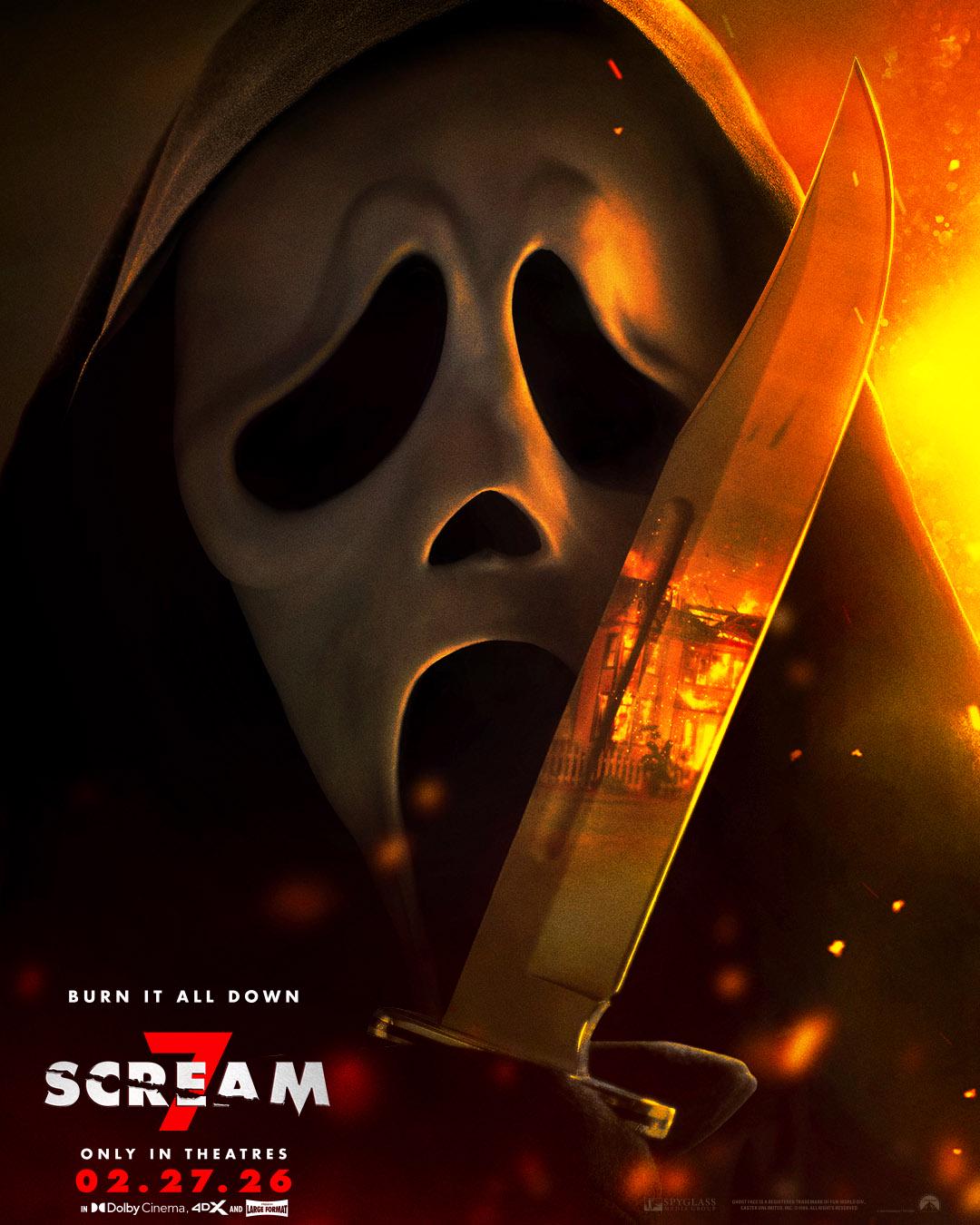
An enduring axiom of Hollywood is that it’s terrified of originality. If a franchise is successful, they’ll clone it until it’s a gibbering, mutated Brundlefly begging to be put out of its misery.
The Scream series limped into theatres in 1996, a mediocre film about a senseless murderer who randomly kills high-school students, terrorizing them with horror-movie trivia. However, by satirizing other slasher films of the era, exaggerating their best and worst qualities, it felt original.
But beginning with Scream 2—and continuing with every subsequent entry—the franchise was swallowing its own tail. The writers invented the fictional Stab franchise, based on the events of Scream, which, true to its inspiration, also included an absurd number of sequels, and is a way for the Scream writers to deify their own creation while hand-waving any criticism away.
Scream 7 begins with a random couple who rent out the infamous Woodsboro murder house for a night. They spend five minutes hyperventilating about the original movie before being murdered, never to be mentioned again.
Neve Campbell returns to drag her way through another tortured appearance as Sidney Prescott, trying to forget the past with her angst-ridden daughter Tatum.
Inexplicably, another Ghostface killer appears and kills two of Tatum’s friends. Revealed through a live video call, he appears to be an old familiar character, back to kill Sidney and Tatum.
A hallmark of the Scream franchise is the constant obfuscation of the identity of the killer, until somebody entirely unexpected (and unlikely) is revealed to be the real killer. While the classic twist is the best part of a great thriller, it relies on clever writing and integration, revealing subtle clues hidden throughout the film that only become obvious in hindsight.
Scream does not do this. The Scream twist involves selecting a random character and inventing an outlandish reason why they suddenly become a mass murderer. It is never clever, mind-blowing, or even sensible.
While the return of beloved characters can immortalize a sequel, Scream 7 exists entirely on the fading merit of the original. Time and again, the rotting corpse of Scream is dragged from its accursed grave for one reason: to print cash and give its aging actors a desperate reason to maintain relevancy.
Thirty years into the franchise, I ask, who is this movie for? Any fan from 1996 is much older now and has probably moved on.
The only connection Scream 7 has to modern audiences is that it feels like it was ghost-written by bad AI.