
Ancient Egypt has long been a staple of the exhibits that roll through the Royal BC Museum, seeming to pop up every few years. This year, true to form, you can once again dive into the world of mummies, pyramids, and ancient curses; however, the exhibit is a bit more spectacular than the ones in years gone by. Thanks to a partnership with MuseumsPartner, an Austria-based company that facilitates trades of exhibit materials all over the world, Ancient Egypt: Obsessed with Life is now open.
Focusing specifically on the processes and trials of the newly dead (the deserving ones, anyways), this exhibit follows the narrative of someone dying, being mummified, travelling through the underworld to be judged by the jackal-headed Anubis, and off into the Field of Reeds for the rest of time. It’s not just any old dead guy, either; the exhibit follows quite precisely a very real artifact found by grave robbers in 1888 in the Necropolis of Thebes. It was then sold to E.A. Wallis Budge in Luxor, who worked under the questionable directives and auspices of the British Museum. The artifact is none other than The Book of the Dead, buried with a royal scribe named Hunefer roughly 3,500 years ago.
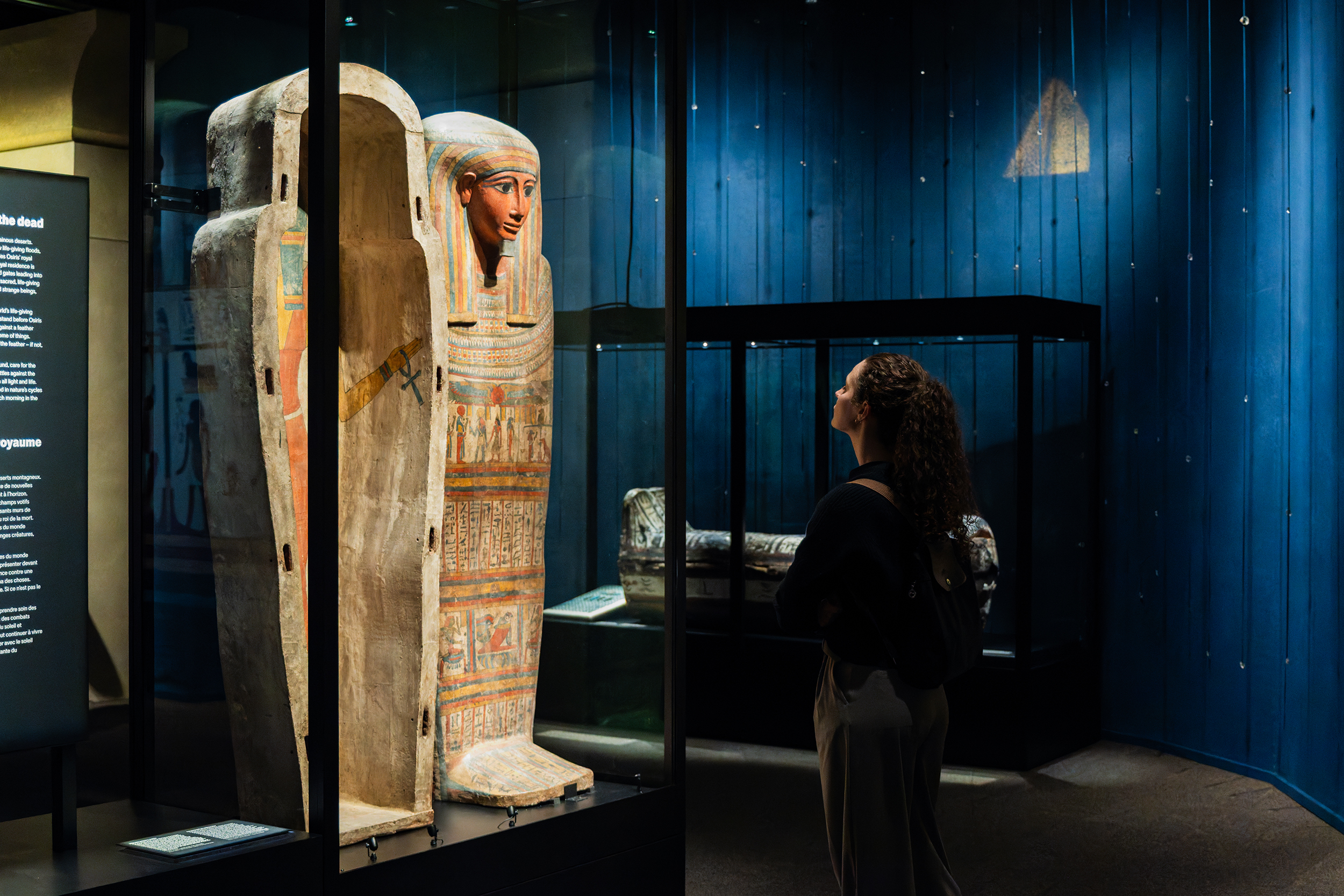
Now, there have been exhibits at Royal BC that have been a little lacklustre in the past, where it just kind of feels like you’re in an office bullpen, but instead of greige cubicles, there are old things suffering the indignity of fluorescent lighting. This is not one of those. The drama and atmosphere in this exhibit are palpable thanks to the excellent and larger-than-life decor, lighting, and soundscapes, as well as the story that unfolds while following through Hunefer’s instruction manual for death.
The myriad interactive elements are also highly engaging and slightly spooky.
Among the areas to explore, there’s even a “scent station,” so you can sniff the various incense and balms surrounding the various rituals. This includes myrrh, which was so important to the Egyptians that many arduous journeys by ship down to the Horn of Africa were undertaken to source it. Those crafty Egyptians figured out that the tree sap resin wasn’t just useful for burning in an effort to please the multitudinous gods, but was also a powerful antiseptic and could be rendered into an embalming fluid. Tricky!
Through interactive cartoon videos placed around the exhibit, you will follow one of Hunefer’s children, Bebe, through the more worldly rituals of grieving, embalming, and entombment, as well as making sure that dear old dad has all the bread, beer, beer-bread, and tiny stone slaves called Ushabtiu. You will learn from the erstwhile Hunefer himself that he may find need of ephemera such as these when traversing the lands of the dead to have his heart weighed against a feather by the seemingly ever-present Anubis.
This is the very first time that this collection of artifacts has ever sat on the soil of the Americas. In fact, they have only left the Moesgaard Museum—located in Højbjerg, Denmark—for short trips around Europe and Africa. This fact imbues the whole experience with a sort of sacred feeling of discovery. Not just any old hum-drum, run-of-the-mill ancient relics, these.
This fun and well-executed exhibit, which runs until January 3, is done in such a way that it’s entertaining and informative for kids as well as older folks, as long as the kids (or adults, for that matter) have some mortality salience, and no Egyptophobia.
Highly recommended.