
It’s no secret that creative expression has been a staple of Victoria’s identity for, well, what feels like forever. In fact, you probably wouldn’t even bat an eye if I told you that Victoria has more artists per capita than anywhere else in the country (which, by the way, it does). On top of that, our Fringe Festival is one of the oldest on the Canadian circuit, our film and television industry generates roughly $60 million a year, and our music industry has a GDP of more than $500 million.
These substantial numbers have risen after being bolstered by a plan set forth by the city five years ago, meant to leverage this artistic identity into a global creative hub. The Victoria Music Strategy outlines a long-term plan to transform the city of Victoria into a destination for music and art. This plan aims to empower local artists while ensuring music becomes a part of everyday life here in the city. Sounds impressive, right? I’m not even done yet.
Earlier this year, the Chamber of Commerce Business Data Lab published a report naming Victoria the most vibrant city for the arts in all of Canada. And while this sounds like a pretty big accomplishment, I can’t help raising an eyebrow at it.
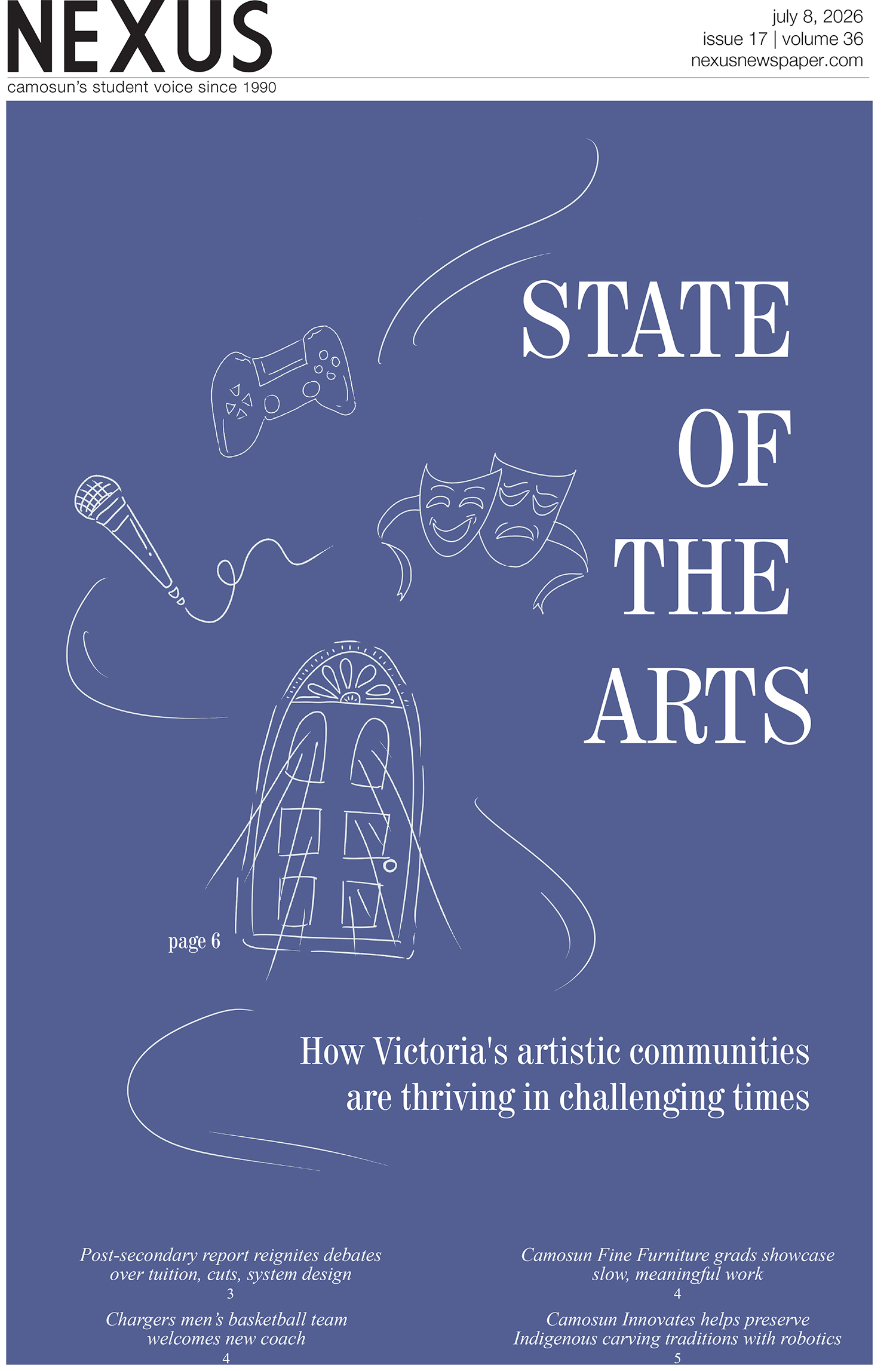
In the last five years alone, we’ve lost countless creative hubs and music venues, including the Victoria Event Centre, Quadratic Sound, Hermann’s Upstairs, and Logan’s Pub. Each of these establishments occupied a key area of Victoria’s vast music scene, and while some vacancies have been filled, the losses of these spaces are still felt.
For many, it had become routine to go out, grab a drink, and catch some live music with your friends. And while this is still more than possible now, it is different. With fewer venues, prices go up. And when prices go up, patronage goes down. It’s a vicious cycle, one that The Little Fernwood Gallery is keenly aware of.
Little Fernwood, located in the heart of Fernwood Village, is an offshoot of the Fernwood Community and Arts Association, a non-profit that aims to facilitate connection and enhance quality of life through myriad programs and initiatives, including affordable spaces for people to play shows, hold workshops, take classes, and much more.
“The whole third-space mentality [is very important to us],” says operations coordinator Lauren Ludwig. “I think our whole board is really behind making somewhere that you can go and visit—other than your home or your work—where community can gather. And there’s definitely fewer places [for that] than there used to be.”
Now, to be called a third space—a location separate from the home and workplace—two boxes need to be checked. Number one: it must be accessible. Number two: it must be neutral. You can’t just waltz down the aisles of a Prada store and call that a third space.
For these reasons, places like Little Fernwood can make for great third spaces. There, communities can gather, connect, and create without breaking the bank, no matter where your interests lie.
“We do a real mixture of events,” says Ludwig. “We try to be a local, accessible venue for all kinds of emerging artists, workshops, musicians, and [a place for] people putting on their first show. The gallery is a lot of people’s first exhibit. It’s a big variety of things.”
Now, of course, Fernwood, as a neighbourhood, has a well-established and highly concentrated creative identity, with The Belfry Theatre, another non-profit organization, located just a few steps away from Little Fernwood. However, while The Belfry owns its building, Little Fernwood leases from the city at a fairly reasonable rate.
“[My colleague and I] just went to this forum about how art venues can be at a real disadvantage with not owning their spaces and having to worry about the lease, and not being able to invest,” says Ludwig. “Or if they do invest in infrastructure upgrades, they could be kicked out or have their prices raised.”
This is a very real, very common concern for a number of venues and community hubs across the city, one that Little Fernwood has more or less been exempt from.
“We lease our building from the city, so that overhead and that insecurity, we don’t have to deal with,” says Ludwig. “And now that we have a very active board that has a vision for the community, we’re able to keep making these improvements and feel secure and like we can offer the space. We don’t have to be worried about whether we’re going to stay in the space.”
Unfortunately, this isn’t always the case for everyone. For example, Other Guise Theatre Company just purchased their building roughly three years ago, and has already had to put it up for sale again.
“Things are looking a little uncertain in terms of the future for us,” says artistic and executive director Matthew Payne. “While we’ve done well and we’ve raised over a million dollars in the last two years, we haven’t raised enough to buy out our investor, who helped us start the project.”
The same year the building was purchased, the company’s investor had to pull out of the project well ahead of schedule, leaving Other Guise in a financial situation it could not have anticipated.
“We haven’t given up trying to find the money that would help us acquire a bank loan that we can handle,” Payne explains. “Because we have equity in the building, we have enough that we can go get a loan right now, but the payments would be unmanageable for us… like $14,000 a month. So, we need to find about $750,000 right now to help us get to a place where we can have a debt that is manageable for us.”
The company did receive some assistance from the local and provincial governments, but is now at a standstill after exhausting all eligible grants.
“The city’s contributed upwards of $300,000 from different programs, but with those infrastructure programs, you can only go once with each project. You can’t keep going year after year,” says Payne. “So we’ve maxed out our public contributions, and so that gap of $750,000 is going to be pretty challenging for us to fill with donations from the general public.”
In other words, they need a miracle. And while establishments like Hermann’s Jazz Club have had successful fundraisers, Other Guise just doesn’t have that same clientele. This has been a hard truth for a number of venues in the city, because, unless you’re a well-established landmark, you’re not very likely to be given a lifeline, which is where the ACI Foundation comes in.
ACI stands for Arts and Community Infrastructure, and this charitable organization aims to prevent the closure and displacement of community spaces by restoring them and stabilizing rents. Founded in 2024, this kind of organization has long been needed in the city of Victoria, especially with more and more venues closing their doors for good, leaving artists and musicians with little to no options (as if finding a venue wasn’t hard enough already).
“It can be really overwhelming to book spaces, especially because we’re losing so many,” says Hannah Kozma, assistant to the operations manager at Little Fernwood. “But it’s gotten so much busier in just my year and a half of being here. So [we’re always] adapting to that busyness and making sure that we’re still doing our best to ensure that people can book here if they want to.”
Booking a venue always looks different depending on who you are and what you’re looking for. But whether you’re an up-and-coming band or a chart-topping musician, it’s always going to be a little bit difficult to find the right space in the right area, at the right time, and for the right price. And that’s what makes the ease of Little Fernwood so appreciated amongst local creatives. Their space enables bands—like local indie group Silverware—to practice and perform without the stress of overplanning or blowing their budget.
“Some venues have schedules, like Little Fernwood, where there’s a calendar, and you can just see what dates are available, which is so nice,” says lead singer Huckleberry Flett. “I wish more places did that; it’s super easy. You just go, fill out an application, and get the time. For most other places, you have to email the booking person, get them to tell you what dates are available, and then they coordinate it with you from there. That’s how most places do it… It’s a bit of a mixed bag.”
Now, assuming you don’t need to book a venue anytime soon, I should probably clarify what your role is in all of this. Don’t worry, you don’t have to man the door or set up any sound equipment. All you have to do is show up. Simple! Community spaces thrive on your involvement, even if it’s just once in a while. Patronage keeps them (and the arts) alive, especially when things get difficult.
“When a building is privately owned, or you’re leasing it from someone who might not share the same ethos that you carry in terms of arts and culture, it adds a level of, in some cases, impossibility, to keeping spaces like this thriving,” says Kozma. “And I think the most important thing, always, is just to get out there and do things.”
Alright, but what if you’re not interested in any of the events being held at your local community centre? What if you don’t want to do macrame and listen to some local band stumble through their set? Well, first of all, have some whimsy. And second, there are plenty of other options out there for you.
For example, you like to eat, right? Maybe have a fun little beverage every now and then? How ’bout games? You like games? Perfect! I’ve got a great spot for you.
Glitch Bar and Games Room, originating in Vancouver, just opened its Victoria location this spring. Now, with an oversaturated market across the pond and a local renaissance unfolding in our restaurant and bar scene, this new addition could be just the ticket.
“It’s the same anywhere in Canada, unfortunately, but in Vancouver, we’re feeling the pinch really, really hard,” says Glitch general manager Julien Chevallier. “We’ve always loved [Victoria], always loved the pace out here. And when we started looking a bit more carefully into it, we started realizing there’s a niche that we could occupy here.”
Chevallier says the city’s response to this opening has been overwhelmingly positive. From customers to city council to the Downtown Victoria Business Association, Victoria has welcomed this retro-themed bar with open arms. And other establishments are benefiting too.
“We’ve heard from some of our neighbours in the bar industry that they’re actually seeing an increase in sales since we opened, which is really the perfect-case scenario for us,” says Chevallier. “You know, we want to add, not take away.”
This outcome serves as a testament to the immense benefits of an overlapping network in the hospitality and creative arts industries: the more accessible, affordable, and safe spaces there are, the more we all benefit. The more we all show up.
Now, of course, a games room won’t be appealing to everyone. Or maybe you just want a little break from all the noise. Maybe you lost at Mario Kart for the third time in a row and need somewhere to cool off. In any case, you won’t have to look very far, because beneath this lively retro bar is a speakeasy called Pour and Famous, where every cocktail on the menu is named after a former bar that once occupied the building.
“It’s kind of a serendipitous story,” says Chevallier. “The room hasn’t been used in like 25 years, and so a lot of the original furniture and decor is all down there. The previous tenant let the liquor licence lapse, so we had to apply for a new one, which allowed us to licence the basement.”
But it doesn’t end there. When applying for a new licence, they were also able to add an amendment allowing minors—accompanied by a parent or guardian—to enter the establishment until 6 pm, promoting a family-friendly environment that’s very well-suited to the city.
“It’s been really fun,” says Chevallier. “On Saturdays and Sundays, we open at noon, so we’ve got kids running around and playing games while mom or dad’s having a beer and a burger. It’s a great vibe in here in the afternoons. And then you blink, and it’s midnight, and you’ve got 200 people in here, and the dance floor is chaos. It’s one of the many faces of this place.”
Another one of those faces involves—you guessed it—live music! Come on. You didn’t really think I was done with that, did you? Beginning this month, local bands will take to the stage every Friday, Saturday, and Sunday, with the hopes of eventually adding burlesque and comedy shows to the lineup here and there.
And then, as fall approaches, Thursdays will become student nights.
“Thursday seems to be the day that we’ve identified where there’s not a whole lot to do,” says Chevallier. “You know, Lucky’s got Monday, Strathcona has Sunday, so we tried picking a day of the week that we’re not competing too directly with anybody… So Thursday, I think, is going to be the student night going forward into the fall. Old-school hip-hop, aggressive deals. That’s the plan.”
Now, I don’t know about you, but this is all sounding very third-spacey to me. Whether you’re into games or music, or you’re just there for the food, these are great places to spend some time. And it’s that kind of variety that makes this city so unique.
“Having these spaces is really important because, especially for the younger generations, if they’re gonna go out and drink, then they can do it in a controlled and safe environment,” says Chevallier. “You know, we take the safety and security of our patrons incredibly seriously… And just remembering that we have a duty of care for everyone that comes in here.”
Whether it’s a bar, a coffee shop, a community theatre, or an art gallery, it’s important to show up for these places. It’s important to show up for yourself. There’s a lot more to life than getting from point A to point B, and that middle area is where art is created.
“Show up, be a part of your community, and make spaces like this wholly and totally necessary,” says Kozma. “If you’re throwing workshops or you’re in a band or you’re doing these things that bring your community together, and you need spaces for those things, you will always find a way to make those spaces. It’s difficult because the world looks crazy right now, but being as involved as you can be, I think, is the best way to keep something like this vital and alive and important.”