
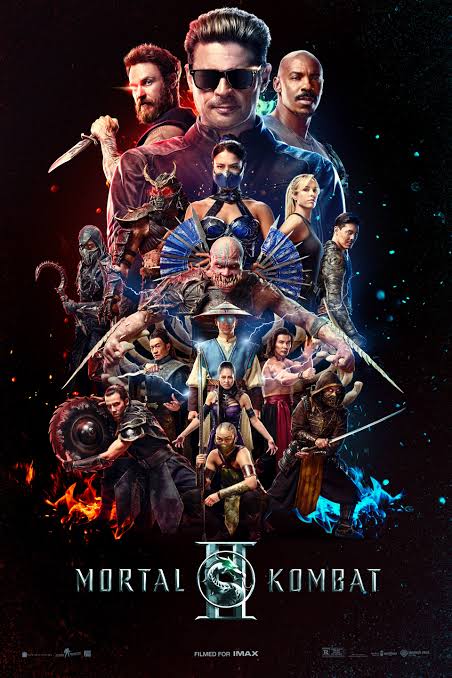
In 1992, the world was blessed with Mortal Kombat on the Sega Genesis and Super Nintendo systems. At the time, this hyper-violent beat-’em-up played into growing fears of the burgeoning video-game industry, which was considered the means by which children would become shiftless degenerates and serial killers. This was on every news station and was the talk of every church group, feeding into the Satanic Panic of the time. In fact, the controversy surrounding Mortal Kombat is what led to the ESRB rating system.
Mortal Kombat II is the sequel to the 2021 reboot of the ’90s duology. The story behind every Mortal Kombat game and movie is more or less identical: reality is split into multiple realms, including Earthrealm, where humans live, and Outworld, which is a dark magical realm ruled by tyrannical despots such as Shao Kahn who seek to dominate Earthrealm. The Mortal Kombat tournament is a series of one-on-one battles between specially selected champions. If Outworld wins, it consumes Earthrealm. If Earth wins, it lives to fight another day, safe for the time being.
The format of the games is simple: two characters fight on a side-scrolling screen against a simple backdrop of a memorable location, like a spike pit or an acid pool. The two warriors fight to the death, often “finishing” their opponents using dramatic, gory “fatalities.”
The problem when it comes to adapting a film to such a simple premise is that there is very little story to work with. The Mortal Kombat movies are entirely based on fan service. Each of the films revolve around selecting warriors, overcoming evil, and having badass fights. The only people who watch them are the players, dying to see their favourite characters, moves, quotes, and locations represented in creative and flashy ways.
However, there is an uncomfortable tension within the film. It appears to both take itself too seriously and not seriously enough. On one hand, it is trying to be a proper drama with actors who are doing their best to evoke an emotional reaction. On the other hand, it’s all campy and ridiculous. Nobody will ever care about a handful of faces that appear one moment and die the next, despite the Herculean efforts of the orchestral soundtrack to get the viewer invested.
The best part of the film was a two-minute demo reel of washed-up Hollywood star Johnny Cage, played by Karl Urban. It was produced and filmed to resemble action movies of the ’90s, with silly acting, choreography, and dialogue. The filmmakers did such an excellent job satirizing their very inspiration that I can’t help but wonder why they didn’t lean further into this throughout the film.
If Mortal Kombat II committed to embodying the spirit of its predecessor, doing away with any pretence of a serious emotional drama and instead embellishing the absurdity of the project, this would be a decently enjoyable film. Instead, it’s nothing more than mildly entertaining but thoroughly mediocre trash that will soon be forgotten.