
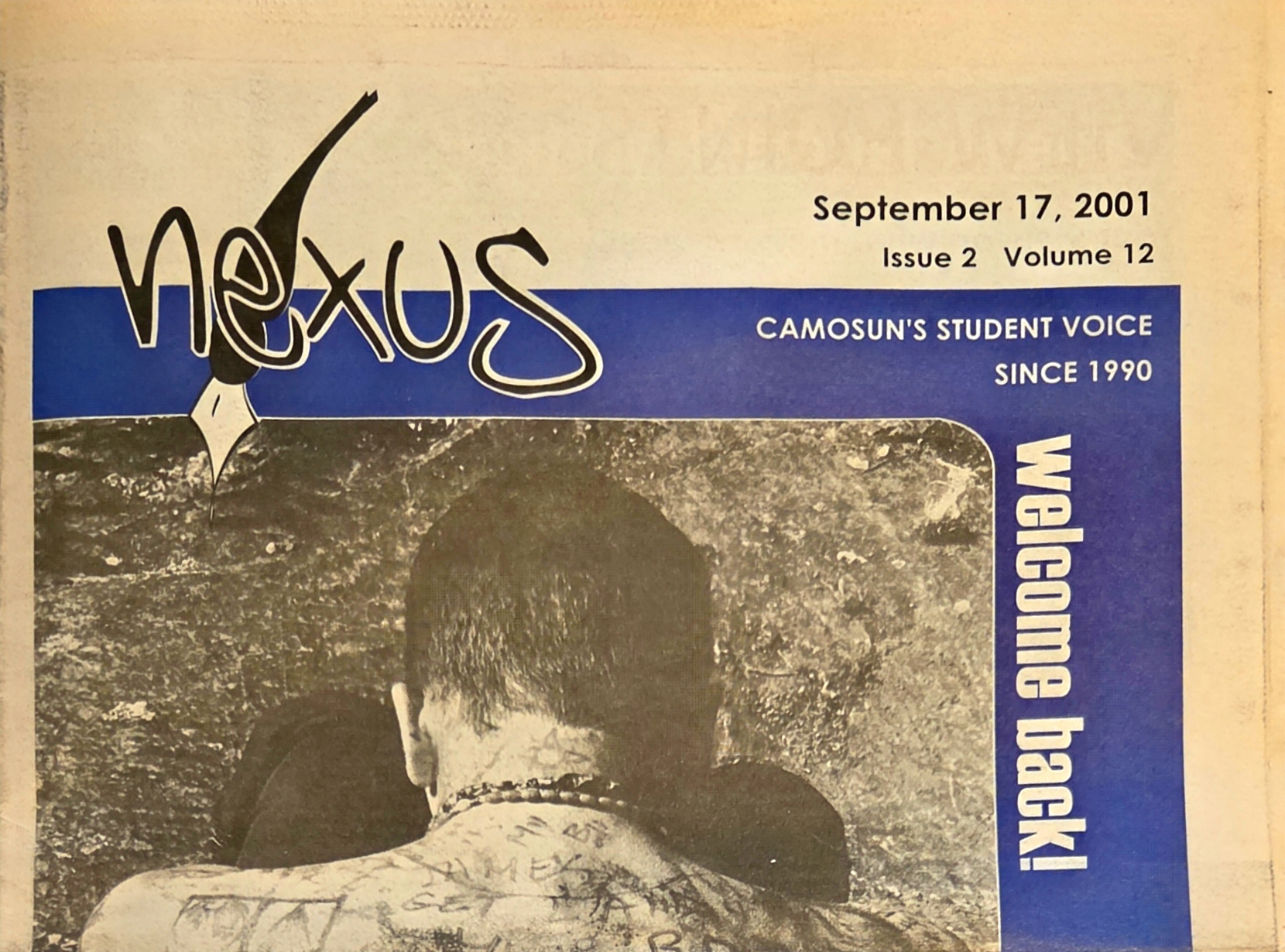
September 11 aftermath: Our issue from 25 years ago came out on September 17, 2001, not even a week after the horrific events of September 11. In the View Points column, Nexus writer Sarah Petrescu asked “will increased militarism, surveillance, and suspicion be justified in defence of upholding ‘good’ forces in the world?” amid worries how the US is going to respond to the attacks to the World Trade Center and the Pentagon. Another article lists student responses to the event, many expressing their shock and horror while others expressed that they were worried about what comes next including the possibility of a war. We now know that in the aftermath, the US launched the War on Terror beginning with the invasion of Afghanistan less than a month later, ushering in decades of conflict and heightened security.
Renter’s struggles: As we’re all painfully aware, housing has always been an issue students have struggled with. This issue talked about renter’s rights, including the rights surrounding roommates and rental increases. There was a lot about the pros and cons of having roommates, from the benefits of having people to split the rent with to the downsides of interpersonal troubles that come up when people are stuck living together. It was hard finding a rental on a student budget back in 2001, and, sadly, that has only gotten much worse over the last 25 years.
Earn while you learn: Every student knows the struggle of trying to earn money while taking courses. Previously, Camosun had a Work Study program that allowed students to work as computer lab assistants, study partners, field researchers, and even Nexus writers for a base rate of $8.99 per hour, approximately $15.69 today, with a maximum of 10 hours a week so it didn’t interfere with studies. As we discussed in this issue, the limited hours were a drawback compared to a typical part-time job, and this program was only available to students on the student-loan program. Camosun no longer offers this, but has instead introduced co-ops where students can earn credits while holding down a full-time position in their field of study.