Camosun College will once again recognize Orange Shirt Day this September, continuing a campus tradition that began more than a decade ago and encouraging students and employees to reflect on the history and ongoing impacts of Canada’s residential-school system.
This year’s events will centre on the theme of healing through the land, reflecting ongoing Indigenous initiatives and work at the college. Camosun Indigenous special projects lead Levi Glass says the event provides an opportunity for the college community to learn and reflect together.
The ceremony will include a welcome to the territory, invited speakers, and participation from Elders. Children from Camosun’s child-care services will also perform a song, something Glass says has become a favourite part of the ceremony for Elders and other attendees.
This year, participants will also be invited to write down commitments to reconciliation and reflections on what they learned during Orange Shirt Day. Those commitments will later be displayed.
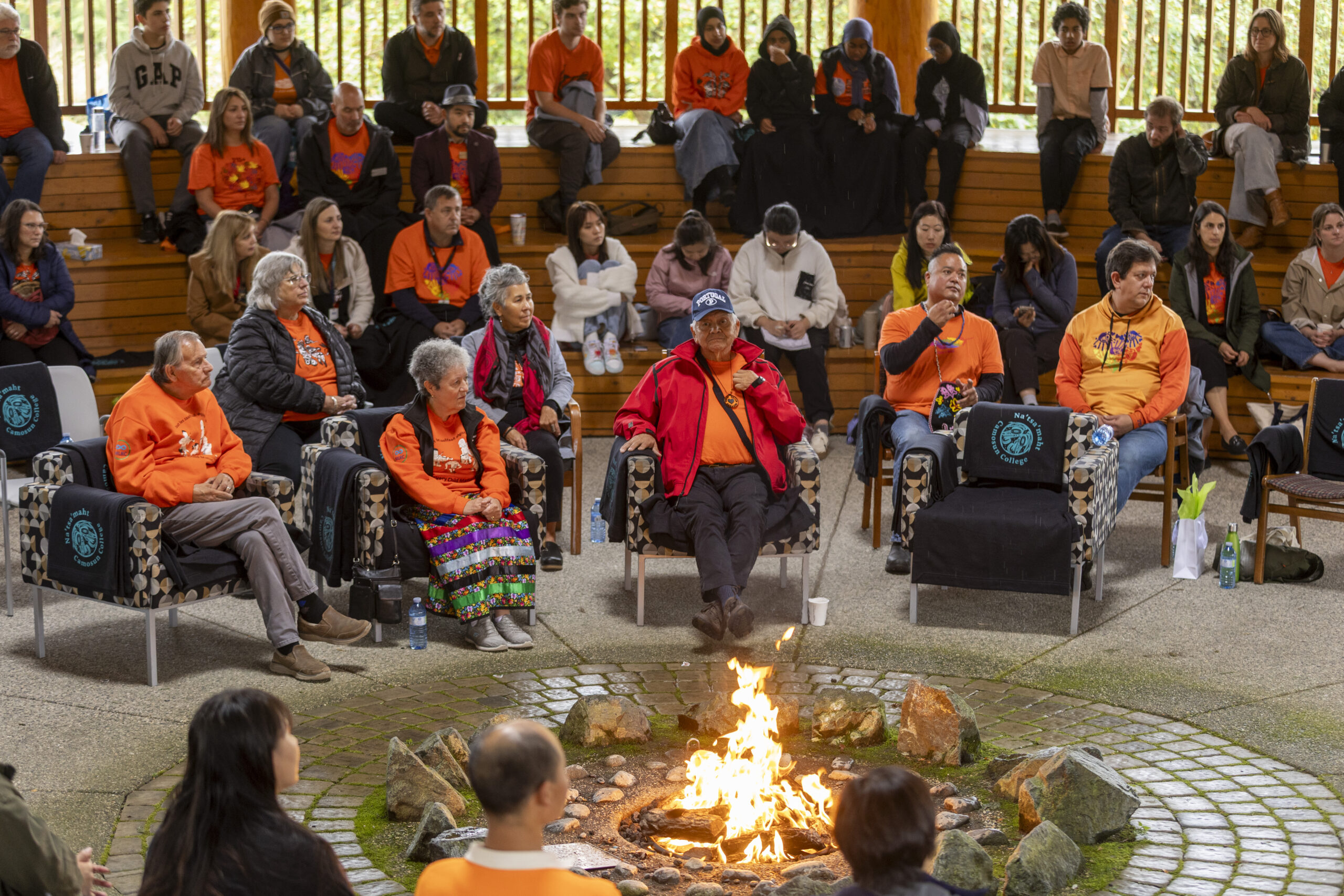
Glass says that holding the event while the college community is together creates an opportunity for collective reflection and for people to consider their role in reconciliation.
“We’re all coming together as one in this sort of real space to better ourselves, the culture of the institution, and the surrounding community,” says Glass.
Camosun’s connection to Orange Shirt Day dates back to 2015, when Indigenous Studies students Eddy Charlie and Kristin Spray organized the college’s first Orange Shirt Day event at Lansdowne with support from the Centre for Indigenous Studies and Community Connections.
Charlie, a residential school survivor, and Spray later continued their work beyond Camosun, helping establish Victoria Orange Shirt Day after graduating from the college.
For Glass, the role educational institutions play in reconciliation is particularly significant because of the history of residential schools. He points to an observation made by the late Skip Dick, an Elder who worked at Camosun, contrasting a time when Indigenous children ran away from schools with the opportunities Indigenous students can find in educational institutions today.
“Our kids, our children, would run away from schools. And now we see, in our lifetime, them running to schools,” says Glass. “Educational institutes are now places in which revitalization of Indigenous culture is reflected and instilled, and in which Indigenous students are given the tools and a sense of belonging, a sense of spirit, a home in which they can thrive and reconnect to the culture that was taken away from them.”
Glass says post-secondary institutions can also provide opportunities for non-Indigenous students to reflect on the history of residential schools and the intergenerational impacts they have had.
For students who may know little about Orange Shirt Day or residential schools, Glass hopes the events provide an understanding of what the day represents.
“The first thing is just an awareness of what Orange Shirt Day means, the history of residential schools, the violence, and the impact that has had on generations of peoples,” says Glass.
But Glass says the goal goes beyond learning history. Students, faculty, and members of the wider community can also consider their own place within educational institutions and how sharing knowledge and stories can contribute to reconciliation.
“We’re teaching and sharing stories with each other, and how we might come together to contribute towards a culture of resurgence and restoration, and appreciation of different cultures and relationships with the land,” says Glass.
Camosun has continued recognizing Orange Shirt Day in the years since its first event. The college’s reconciliation efforts also extend into classrooms and other parts of campus life, with Glass noting that Indigenous perspectives have increasingly been incorporated into course content.
“So many courses now have elements of that process of Indigenization across the institute,” says Glass. “They don’t really have to search it out as much as they perhaps had to.”
Glass says students can continue engaging with Indigenous learning throughout the year by learning about the local territory, paying attention to Indigenous artwork around campus, and considering the stories the works tell about the land and people’s relationships to it. Students can also attend Indigenous events that are open to the broader college community.
Throughout September, Camosun’s libraries are also highlighting resources related to Orange Shirt Day. The college has introduced an Authentic Indigenous Voices designation to help students identify materials authored or created by Indigenous people in library collections.
For Glass, Orange Shirt Day provides a starting point for students to understand residential schools while also considering what reconciliation can mean within the educational community they’re already part of.
By gathering as a college community, says Glass, students and Camosun employees can learn from the past while considering how they contribute to the institution and its relationships moving forward into the future.