
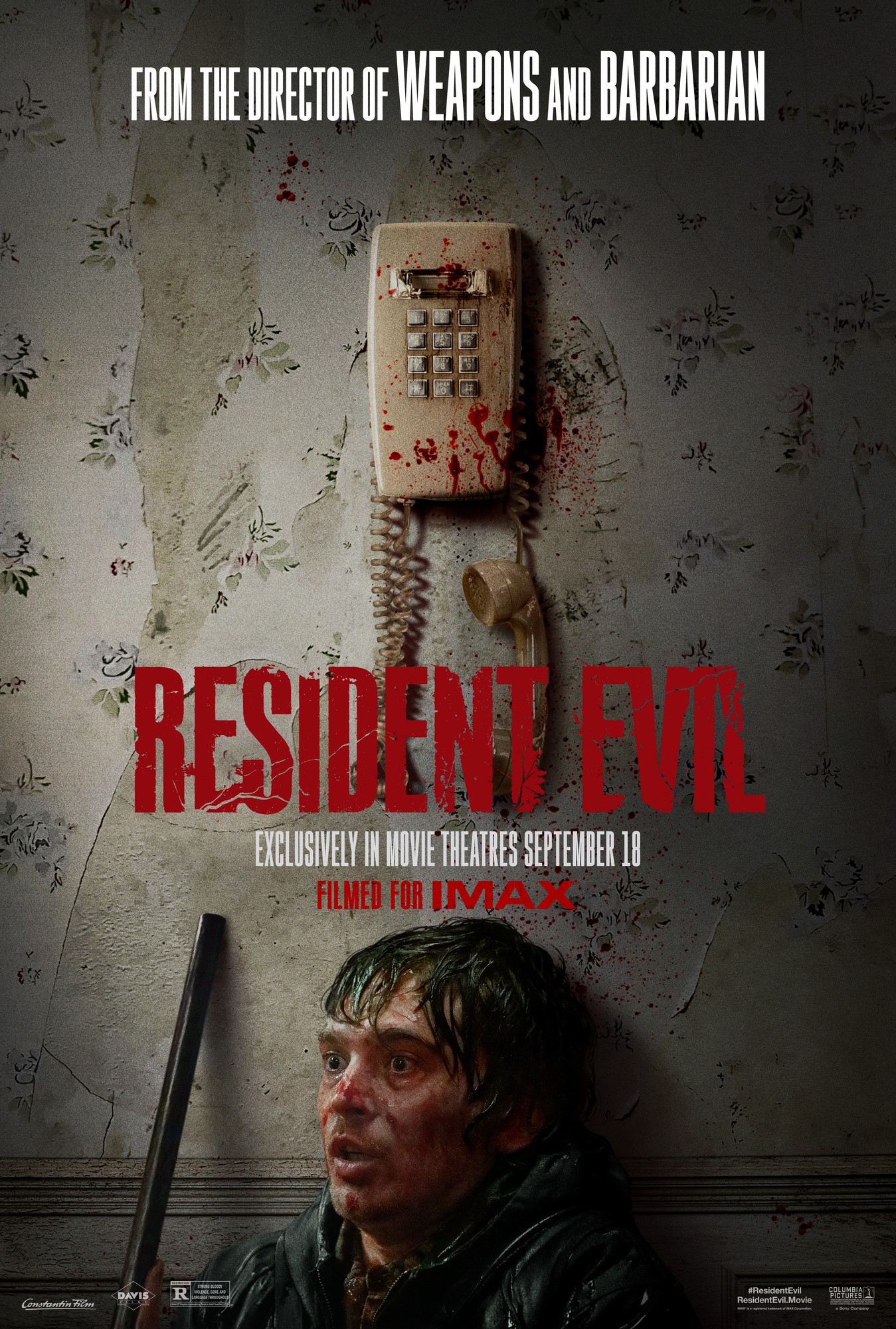
Resident Evil is a horror franchise initially developed by Capcom that saw its first entry released in 1996 for the Sony Playstation. RE1 was a slow-burn classic that saw a group of special operatives holed up in a mansion one evening, only to find that the building is infested with nightmarish monsters.
At the time, the natural limitations of the Playstation—gritty textures, crushed audio, low draw distance, low rendering ceilings—culminated in horror games that leaned primarily on silence and dread, punctuated by brief moments of action, made all the more tense by poor controls and a dearth of resources.
Resident Evil has seen its fair share of time on the big screen as well, with its most infamous film series starring Milla Jovovich. Now, Zach Cregger (writer and director of Weapons) has released a film simply called Resident Evil. It follows Bryan, a medical courier who sloppily DoorDashes body parts between hospitals. When an emergency package is to be delivered to Raccoon City Hospital, predictably, shit hits the fan. What follows is a movie that many viewers have said doesn’t feel like Resident Evil. They are correct.
Let’s first talk about how the film succeeds. Linear horror games are rife with silly tropes, nonsensical design choices that serve mostly to disguise programming limitations. This movie mocks them perfectly.
Bryan finds himself inexplicably alone most of the time, wandering from one bombastic set piece to the next, encountering forgettable characters who offload exposition then die horribly. He receives dispassionate directions over the radio by a faceless stranger; he must push onwards despite every reason not to; and, my personal favourite, he repeatedly encounters doors and gates barred with padlocks that seem illogically invincible to brute force.
Everything that gamifies survival horror is present in this movie, and in that sense, it’s a good Resident Evil movie, in a tongue-in-cheek sort of way. However, the problem revolves around Bryan’s characterization. He’s a slovenly, weak, imbecilic nuisance who insists on narrating every piece of inane drivel that occurs to him, as if the viewers need to be informed about how to feel about the strange events occurring. There is not a moment in the film where Bryan isn’t spouting an endless stream of insipid verbal diarrhea. This is not what made Resident Evil games compelling. It was the dread and silence that drew us in; the cold, merciless isolation and loneliness.
Many modern filmmakers worry that the current generation of TikTok junkies will get bored if not constantly engaged. However, silence is more powerful than any dialogue in a thriller. An excellent illustration of this are the 2022 and 2025 films Sisu and Sisu: Road to Revenge, starring a grizzled, aging man who singlehandedly takes on a platoon of Nazis to fulfill a vendetta. In the first film, he says 11 words. In the second, he says nothing. A well-written film and strong actor can carry a performance without words, and it’s that powerful silence that invites the viewer along for the ride.
Resident Evil entirely misses the point of this, and, accordingly, is an abysmal failure at capturing the gritty survival-horror vibe of the original series. This is a shame, because if the protagonist were written and cast differently, it would have been been a great film.